OTA guests: how to build a direct relationship before arrival?
4
min de lecture
-
18 September 2026
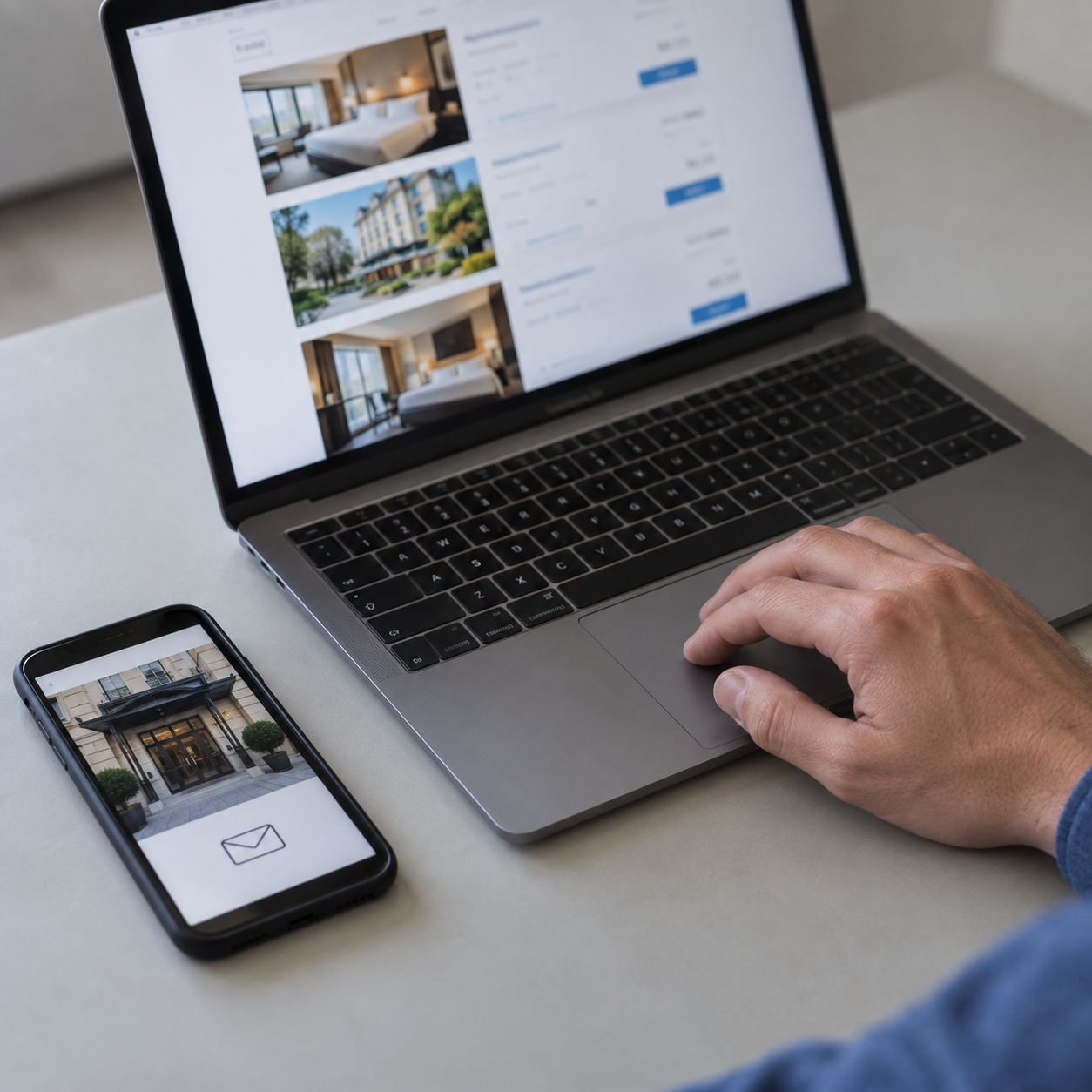
A guest has just booked your hotel on Booking.com or another OTA. The reservation is confirmed, and so is the commission that comes with it.
At this stage, the goal isn't to turn this into a direct booking. It’s to ensure that when they think about their stay, the traveler thinks of your hotel, not just the platform they used to book it.
The period between booking and arrival is the perfect time to start building that relationship.
A helpful message, a well-prepared arrival, and a few direct interactions can introduce the traveler to your property’s unique experience and set the stage for a future direct booking.
OTAs remain an important acquisition channel for hotels. They provide visibility and allow travelers who don't know your property yet to discover it.
But when a guest books through a platform, the entire relationship can easily remain tied to that platform.
The traveler knows their Booking.com reservation number, checks messages on the platform, and accesses their information through their OTA account. The hotel, meanwhile, risks being seen as nothing more than a place to sleep.
This is precisely what you need to avoid.
Once the reservation is confirmed, the experience belongs to the hotel.
The pre-stay period is your chance to start building that relationship before the guest even walks through the door.
The goal isn't to bypass the OTA or challenge the existing booking. It’s about gradually introducing the property, your team, your services, and your hospitality.
This familiarity is what will make a future direct booking easier.
Building a direct relationship doesn't mean flooding guests with emails before their stay.
Your first message should, above all, be useful.
Ask yourself what guests are really looking for a few days before they arrive: how to get to the hotel, check-in times, where to park, how to prepare for their stay, or who to contact if they need anything.
A pre-stay message could, for example, include:
This is the first time the traveler receives communication directly from the hotel, featuring its branding and specific details.
It is no longer just a reservation made through a third-party platform. The stay is starting to take shape.
A well-crafted pre-stay email should, however, remain simple. There is no need to present the entire hotel offering in a single message.
Providing useful information at the right time creates more value than a series of promotional communications.
In many hotels, the first real interaction with the guest still takes place at the front desk.
At that moment, the guest has just arrived, teams may have several check-ins to manage, and everyone’s priority is to get to their room as quickly as possible.
The pre-check-in allows you to shift part of this interaction to before arrival.
Guests can fill in necessary information, prepare for their arrival, and potentially indicate any special requirements.
For teams, this also helps anticipate certain situations: late arrivals, requests for a crib, parking needs, or other information useful for preparing for the stay.
But the benefits go beyond simple organization.
This process creates a new direct touchpoint between the traveler and the property.
The digital hotel check-in thus becomes a key stage in the guest journey, rather than just an administrative formality.
The relationship begins before they even reach the front desk.
An OTA guest has chosen a room, but they may not be aware of everything your property has to offer.
The pre-stay period is therefore the perfect time to present information that can truly enhance their experience.
A few days before arrival, a guest might need to know:
The mistake would be to turn this moment into a catalog.
Select what is relevant to the stay.
A family might be more interested in parking, a crib, or kid-friendly activities. A business traveler might be looking for late check-in, an early breakfast, or information on transportation.
This selection makes communication more relevant and begins to personalize the experience.
It also allows the property to showcase something that the platform knows less about: the reality of the on-site experience.
The staff knows the hotel's constraints, services, hours, and surroundings. It is this knowledge that gives value to direct communication.
The relationship built before arrival thus contributes to a broader strategy of building loyalty from the pre-stay phase.
Turning an OTA guest into a direct guest is not about explaining that they should have booked differently.
The goal is first to provide an experience smooth enough that they will spontaneously think of your property for their next stay.
This relationship is built before, during, and after the stay. But it can also be strengthened through very simple actions.
For example, a few days before arrival, the hotel can send a message like:
Your stay is approaching. You can now prepare for your arrival, check the hotel's practical information, and let us know if you have any special requests.
For the guest, the benefit is immediate: they know where to find the information they need and can plan for their arrival.
For the hotel, this message creates an initial, direct, and recognizable point of contact with the establishment.
After the stay, provided that regulatory frameworks and guest consent allow it, the relationship can continue with tailored communication: thank-you notes, hotel news, loyalty perks, or relevant offers for a future stay.
This approach is part of a broader strategy for hotel customer loyalty, which relies not just on a points program, but on the quality of the guest journey and the relationship over time.
The idea is not to increase the number of solicitations, but to gradually create several consistent touchpoints.
OTAs therefore remain a useful acquisition channel. They can help a new traveler discover your hotel. Once the booking is made, it is then up to the establishment to build the experience and the relationship.
When the guest knows your hotel, its team, its website, and the quality of their stay, a future direct booking becomes much more natural.
An OTA guest does not need to wait until check-in to enter your hotel's guest journey.
The period between booking and arrival can already be used to prepare for their stay, collect useful information, and establish the first direct contacts with the property.
GetWelcom supports hotels before, during, and after the stay to facilitate these interactions and build a seamless guest journey.

.png)