Logiciels & PMS
Automating to improve customer relationships in hotels: the ultimate guide
4
min de lecture
-
15 January 2026

This is a reality in many hotels.
Teams know they could improve the customer experience. They would like to spend more time with travelers, personalize more, offer services at the right time.
But in reality, daily life takes over.
Emails are piling up, simple requests are repeated, check-ins are repeated, interruptions are constant. At the end of the day, there is little room left for anything other than the operational.
In this context, automation is not about modernization.
It's a question of balance.
Automating customer relationships is not about replacing teams. The goal is simpler: eliminate repetitive tasks to give back time to the interactions that really matter.
When properly implemented, automation works at two levels.
On the one hand, it makes the experience more fluid for the customer. The information comes at the right time, the steps are simpler, the requests are answered quickly.
On the other hand, it lightens the load on the reception side. Teams are less busy for basic topics and can focus on higher-value exchanges.
It is this combination that makes the difference.
In a traditional way, a large part of the customer relationship is based on the availability of reception. Each request goes through her, each piece of information passes through her, each interaction depends on her ability to respond quickly.
With automation, some of these exchanges become proactive.
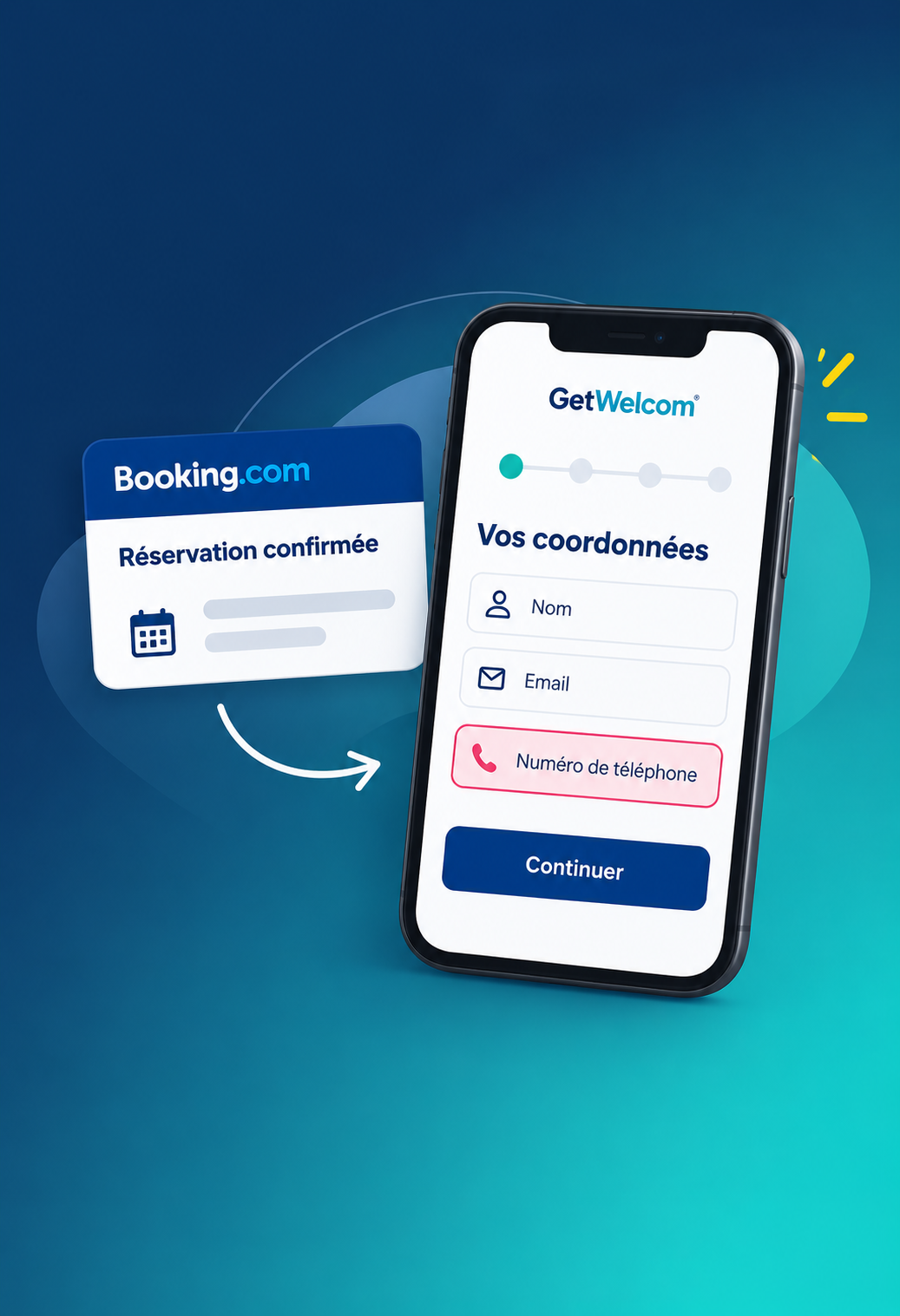
The customer receives a clear confirmation after booking. Before arriving, he accesses useful information without having to ask for it. During his stay, he can easily find what he needs or discover the services offered. After she leaves, the relationship continues in a natural way.
What's changing isn't just the volume of messages. It is their relevance in the course.
One of the first visible effects of automation is responsiveness.
A customer no longer waits for a receptionist to be available to get information. He receives it directly, often before he even asks himself the question.
A well-constructed pre-stay message makes it possible to anticipate needs. One Call back at the right time avoid a misunderstanding. Clear information limits back and forth.
This responsiveness gives the customer the impression of a constant service, even with a small team.
Personalization is often seen as a difficult goal to achieve, as it requires time and a good understanding of the customer.
In practice, it is mainly based on using the right information at the right time.
A customer on a business trip does not have the same expectations as a couple on a weekend. A regular does not react like a first-time visitor. Adapting messages and proposals according to these elements profoundly changes the perception of the stay.
Automation makes it possible to integrate this logic without burdening the work of teams. It makes personalization more fluid, more consistent, and above all more constant.
A customer who receives the right information at the right time moves forward without friction. He understands what to do, knows what to expect, and feels supported throughout his stay.
This sense of fluidity plays a major role in the Satisfaction in 2026.
Irritants are decreasing. Misunderstandings are becoming rarer. Exchanges with the team are becoming more qualitative.
It's not a dramatic transformation. It's an accumulation of small adjustments that, put together, change the overall experience.
One of the quickest benefits to be observed concerns teams.
Booking confirmations, pre-stay emails, answers to simple questions, or post-departure reminders are a significant burden when handled manually.
En automating these tasks and exchanges, the reception recovers time.
This time can then be reinvested in what is the value of the job: the reception, the management of sensitive situations, the human relationship.
This is often when the perceived quality of service increases.
The impact is not limited to internal organization.
A well-supported customer is more receptive to proposals. He understands services better, plans more easily and makes a more natural purchase.
In this context, offering an upgrade, a service or an activity becomes more effective.
Automation also makes it possible to maintain the link after the stay, by relaunching customers or by offering adapted offers. It's the Loyalty principle.
These are the mechanisms that transform customer relationships into a growth driver.
Not all moments of the stay require the same level of human intervention.
Some touchpoints lend themselves particularly well to automation, especially those where information is repetitive or expected.
Before arrival, the customer seeks to understand how their stay will take place. During his stay at the hotel, he needs to quickly access certain information or to discover the services available. After leaving, he is more open to giving his opinion or considering a return.
These are the moments where automation has the most impact.
The fear of losing quality of care is frequent.
In the field, that's rarely what happens.
When repetitive tasks decrease, teams are more available. They can take the time to listen, talk, and personalize interactions.
Automation does not replace humans. It simply prevents it from being mobilized where it does not provide value.
What to remember
Automation is not a technological overlay.
It is a way to simplify the customer journey and to lighten the daily life of teams. When well integrated, it improves fluidity, increases satisfaction, and creates new revenue opportunities.
The real challenge is not to automate more.
It's about automating the good times.
If your team still spends a large part of their time on repetitive tasks, if your customers ask the same questions, and if your communication remains scattered, there is probably a lever to activate.
Structuring your automation is not dehumanizing your hotel.
It is Giving back space to humans where they really matter.
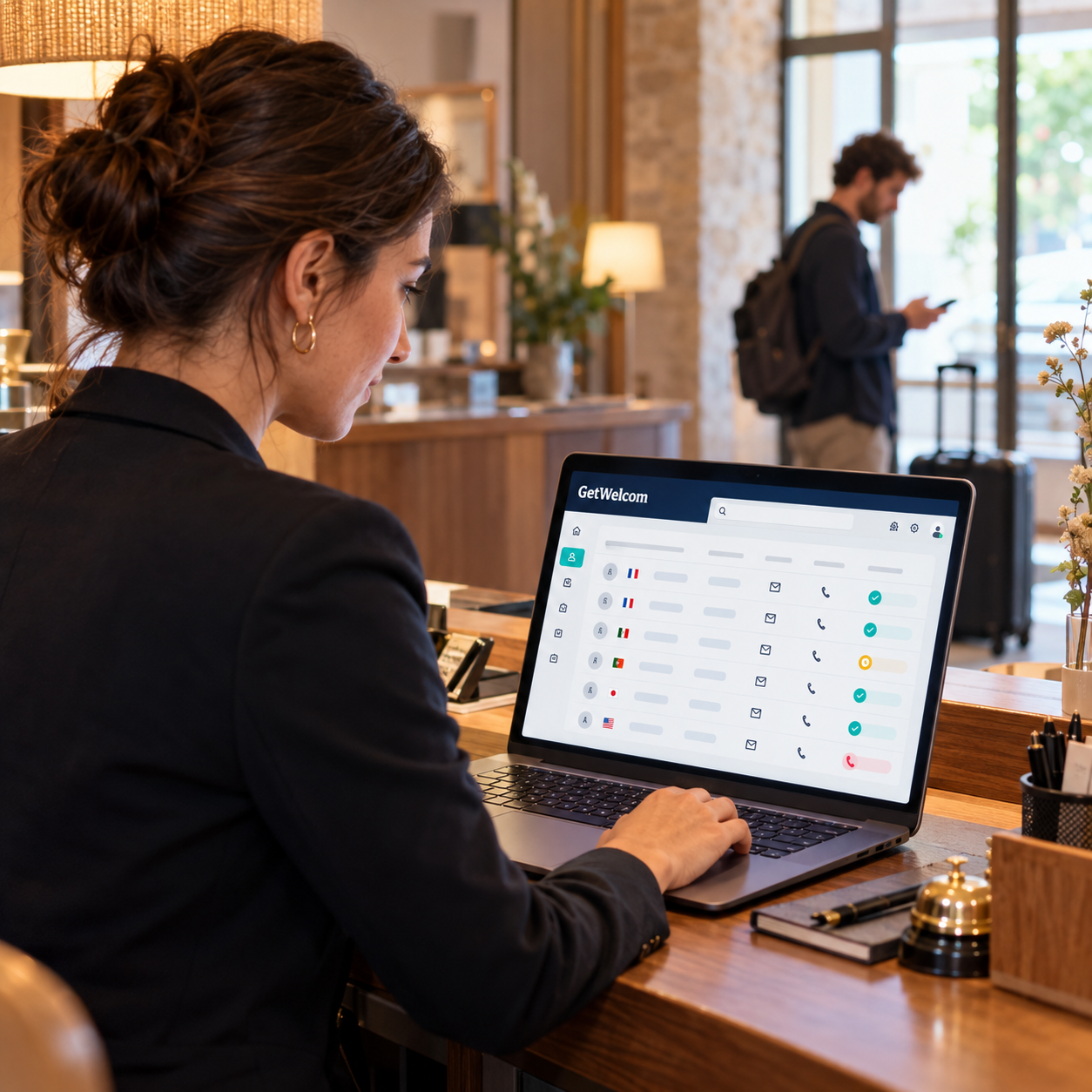
GetWelcom allows you to automate key points in the customer journey to streamline the experience and simplify your operations.