Conformités et obligations
Digitizing the guest journey: an underestimated compliance lever
4
min de lecture
-
10 July 2026

Most hoteliers who decide to digitize their guest journey do so for operational reasons: saving time at the front desk, reducing repetitive questions, and increasing upselling. Regulatory compliance is rarely among their primary motivations.
This is a missed opportunity, because digitizing the journey simultaneously covers several legal obligations that hotels face. Atout France, GDPR, communication traceability, and payment security: each of these areas benefits directly from a digitized and documented guest journey.
This article is not a list of regulatory obligations. It is a demonstration that digitization, when well-designed, solves several compliance issues at once, even if that is not its primary objective.
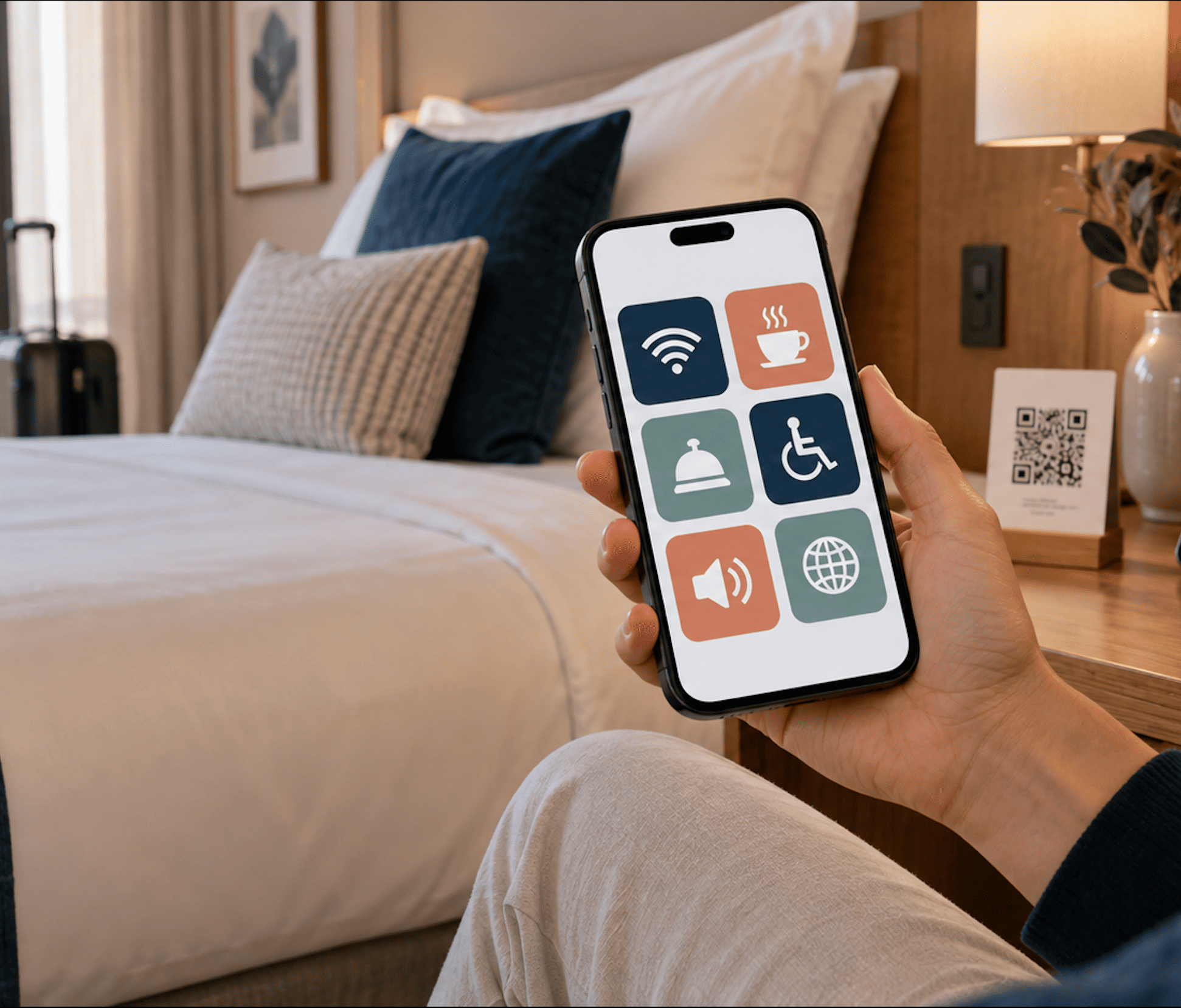
Hotels classified in France must guarantee guests access to a means of communication in their room. Historically, this obligation was met with a landline phone. With the update to Atout France standards, this requirement can now be satisfied by a digital solution, provided it allows the guest to contact the front desk at any time from their room.
This is the first point of intersection between digitizing the journey and regulatory compliance. A digital guest directory featuring a communication function with the front desk meets this requirement while eliminating landline maintenance costs, reducing the amount of electronic equipment to manage, and offering an experience better suited to the expectations of today's guests.
It is not just about streamlining costs. It is a compliant substitution of mandatory equipment with a documented digital solution.
The traditional guest journey collects data at several points: during booking via an OTA or phone, at paper check-in, and during the stay through front desk interactions. This data is rarely fully traceable. Who collected what, when, and with what explicit consent? In an analog journey, the answer is often unclear.
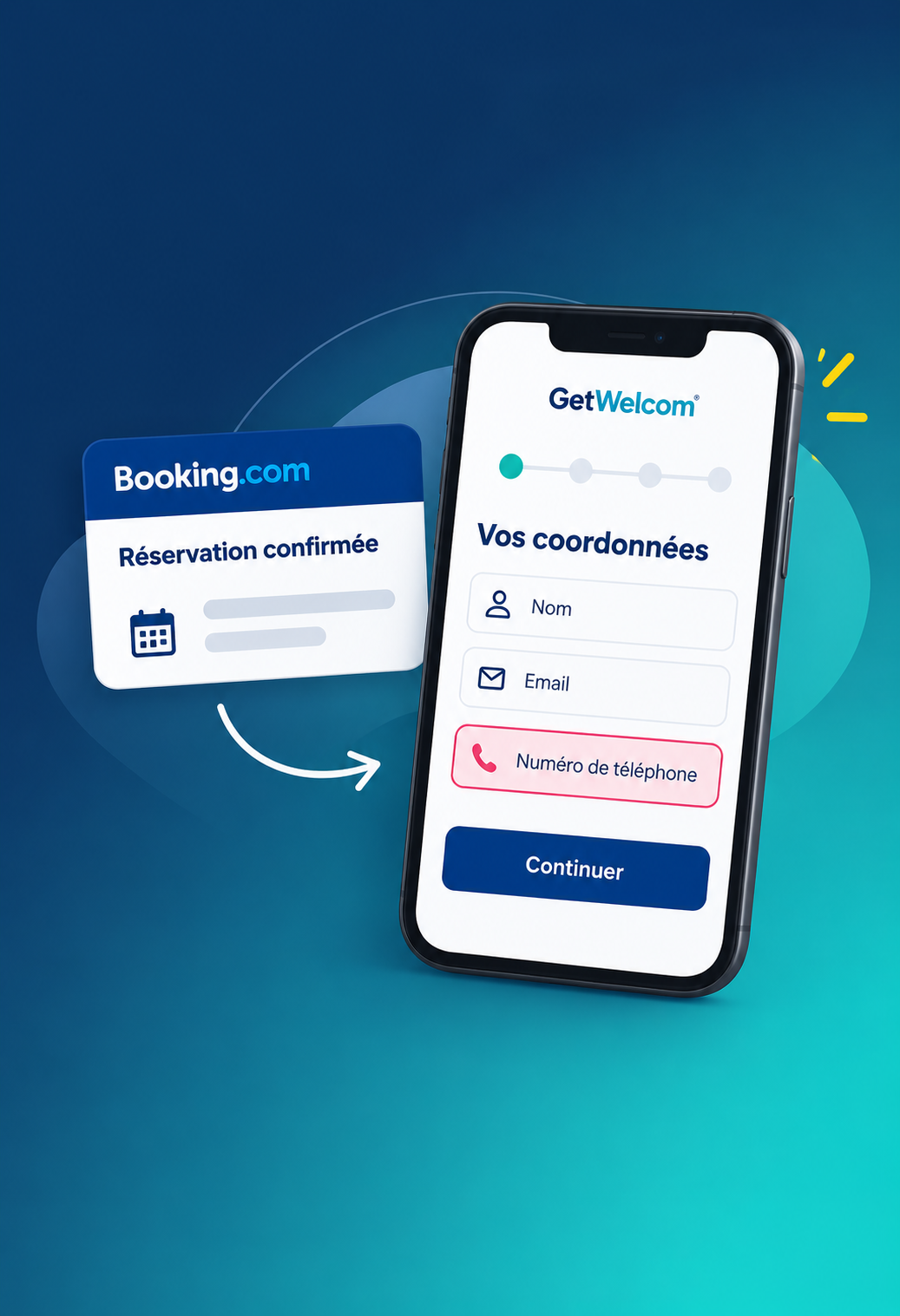
In a digitized journey, every collection point is documented. The guest completes an online pre-arrival form: the date, time, and content of this entry are recorded. They check a box consenting to receive post-stay communications: this consent is timestamped and archived. They leave their preferences in a welcome form: this data goes directly into a structured guest database.
This traceability is not an anecdotal side effect. It is exactly what the GDPR requires: proof of the legal basis for each processing activity, a history of consents, and the ability to respond to a request for data access or deletion within one month.
A hotel that digitizes its guest journey and connects this data to a centralized hotel database automatically builds partial GDPR documentation without any extra effort. Compliance stems from the architecture of the journey, not from a parallel administrative procedure.
The PCI DSS standard imposes strict requirements on hotels regarding how payment data is collected, stored, and transmitted. One of the most frequent friction points is the booking guarantee: the hotel collects the customer's bank details, sometimes on paper or via email, and handles them manually.
This way of operating is both non-PCI compliant and operationally risky. Digital bank pre-authorization solves this problem upstream. The customer receives a link, enters their bank details into a secure form hosted by a certified payment provider, and the hotel never stores the raw card data. It works with a token, a digital reference that allows it to initiate transactions without accessing sensitive data.
This is not only more convenient for the customer and the front desk team. It is the only method of collecting a guarantee that is structurally PCI compliant, without the hotel having to implement complex security infrastructure.
Beyond formalized legal obligations, the traceability of interactions with customers is an operational compliance issue that hotels regularly underestimate. When a customer disputes a service at the front desk that they claim not to have ordered, or requests the processing of a request they claim to have made, the question becomes: can the hotel prove what happened?
With an analog process, the answer is almost always no. Phone calls are not recorded, front desk conversations leave no trace, and requests made orally disappear.
With a digitized process, every interaction creates a trace. A room service request sent via a digital interface is timestamped and associated with the customer's profile. The front desk's response is documented. If a request has not been processed, it remains open in the system until resolved. This traceability protects the hotel in disputes, but it also protects the customer against oversights and communication errors.
In certain sectors of the hospitality industry, particularly luxury establishments or multi-property groups, this documentation of interactions is also a requirement for quality certifications and internal audits. It cannot be produced from a non-digitized process.
What connects all these points is that regulatory compliance in the hospitality industry is increasingly a matter of digital architecture, not manual procedures. A hotel that manages its customer journey on paper and orally cannot, structurally, produce the evidence that various regulations require.
A hotel digital platform is not designed primarily for compliance: it is designed to improve the customer experience and operational efficiency. But it continuously produces the conditions for compliance: data collected with consent, traceable interactions, secure payments, and Atout France obligations covered.
This dual benefit is rarely highlighted in commercial discussions, because hoteliers evaluate tools based on their immediate impact on customer satisfaction or additional revenue. Compliance is perceived as a legal matter, handled separately.
This is precisely where the underestimated value of digitizing the journey lies: it does not impose an additional compliance project. It makes it redundant across several dimensions at once.
For the digitization of the customer journey to effectively fulfill this compliance function, tools must be chosen with a few specific criteria.
The pre-arrival form must natively integrate GDPR consents and keep an exportable record of them. The payment platform must be PCI certified and work via tokenization. The in-room communication solution must be documented as compliant with Atout France requirements. And the data collected at each stage of the journey must feed into a centralized customer database, with differentiated access rights and configurable retention periods.
These criteria are not additional constraints. They are the characteristics of a well-designed tool that covers operational needs and regulatory obligations without separating them.
GetWelcom covers the main regulatory requirements for the hotel guest journey: Atout France compliance for telephony, GDPR-compliant guest data collection, and a centralized database with secure access. To see how the solution integrates into your property: request a free demo at getwelcom.com.