In-stay guest satisfaction: detecting signals during the stay before it's too late
4
min de lecture
-
10 July 2026
.jpg)
The guest stayed for two nights. They smiled at the front desk, said thank you upon leaving, and seemed satisfied. Two days later, the hotel sees a two-star review appear on Google: "Noisy room the first night. Requests ignored. A shame."
No one at the front desk remembers an unaddressed request. There is no record in the PMS of a reported issue. The guest said nothing when they left.
This scenario is more common than you might think. According to available data, 53% of dissatisfied guests do not complain directly to the hotel. They keep their frustration to themselves during their stay, then post it online after they leave. At that point, it is no longer possible to intervene.
In-stay satisfaction is precisely the ability to detect these signals during the stay, while there is still time to act.
Hotel guest satisfaction is often measured at the wrong time. The post-stay satisfaction survey, sent 24 hours after check-out, measures what the guest experienced. It does not allow you to change it.
The in-stay approach is based on the opposite principle: collecting a signal during the stay, when intervention is still possible. It is not a measurement strategy. It is an action strategy.
The difference is tangible. A guest who reports that the air conditioning isn't working during their stay can be offered a solution within the hour. That same guest who leaves without saying anything and writes their review three days later cannot be won back. The hotel is left with a negative comment about a problem it never had the chance to resolve.
The challenge isn't whether guests have problems during their stay. They always will. The challenge is whether the hotel is able to detect them before the guest leaves.
Most guests don't complain at the front desk for reasons that have nothing to do with their level of satisfaction. Some don't want to "bother" anyone. Others doubt their request will be handled quickly. Still others feel that the effort of getting up, going to the front desk, and explaining the problem isn't worth it for a one-night stay.
The traditional channel for feedback—the in-room phone or a visit to the front desk—creates friction. This friction discourages the majority of reports. It’s not a question of the staff's willingness; it’s a question of the guest journey design.
Reducing this friction is the primary lever. A guest who can send a message in two taps from their personal phone, without downloading an app or logging in, will report a problem they otherwise never would have mentioned.
Several tools can capture signals during a stay, depending on the property's profile and its clientele.
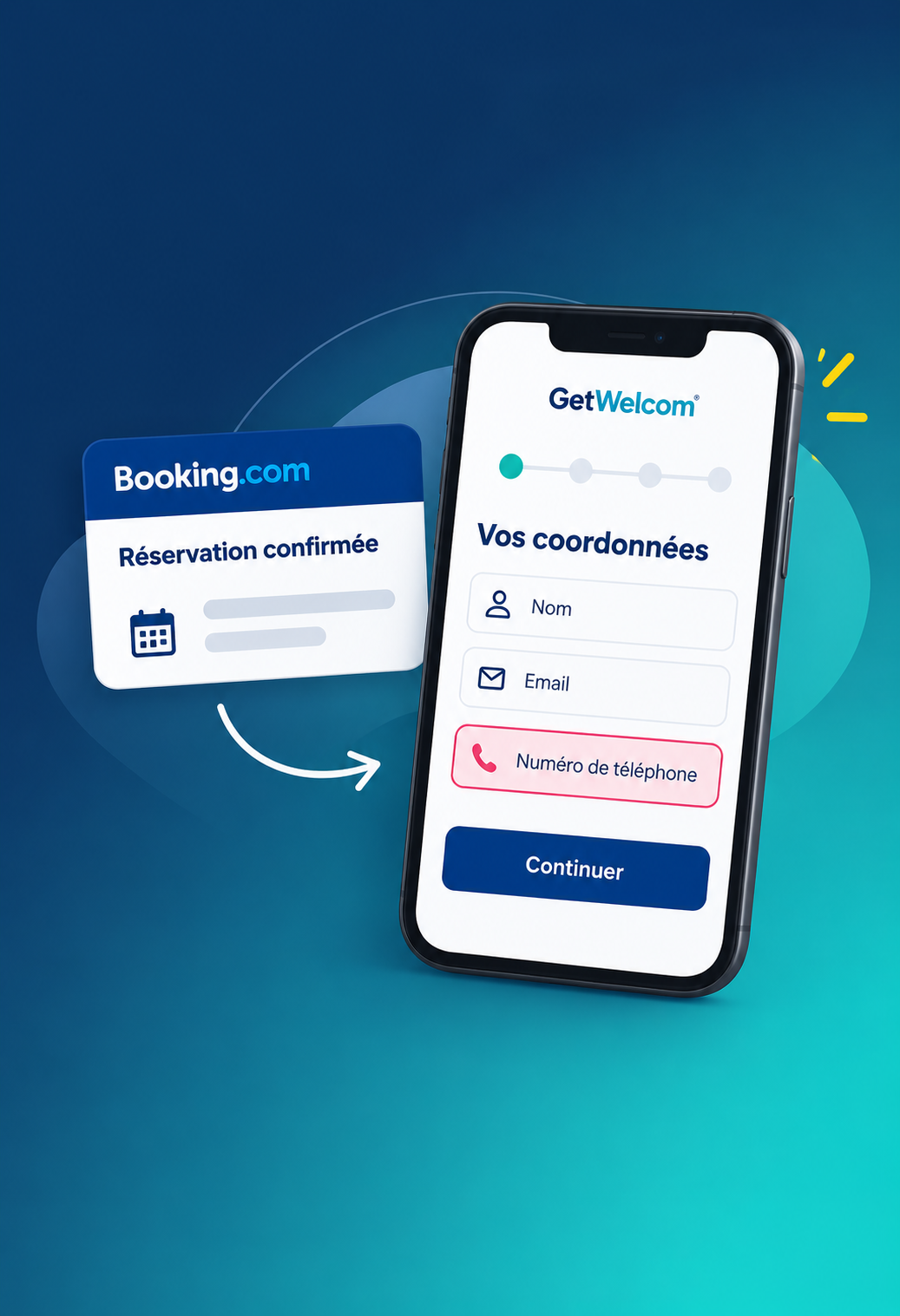
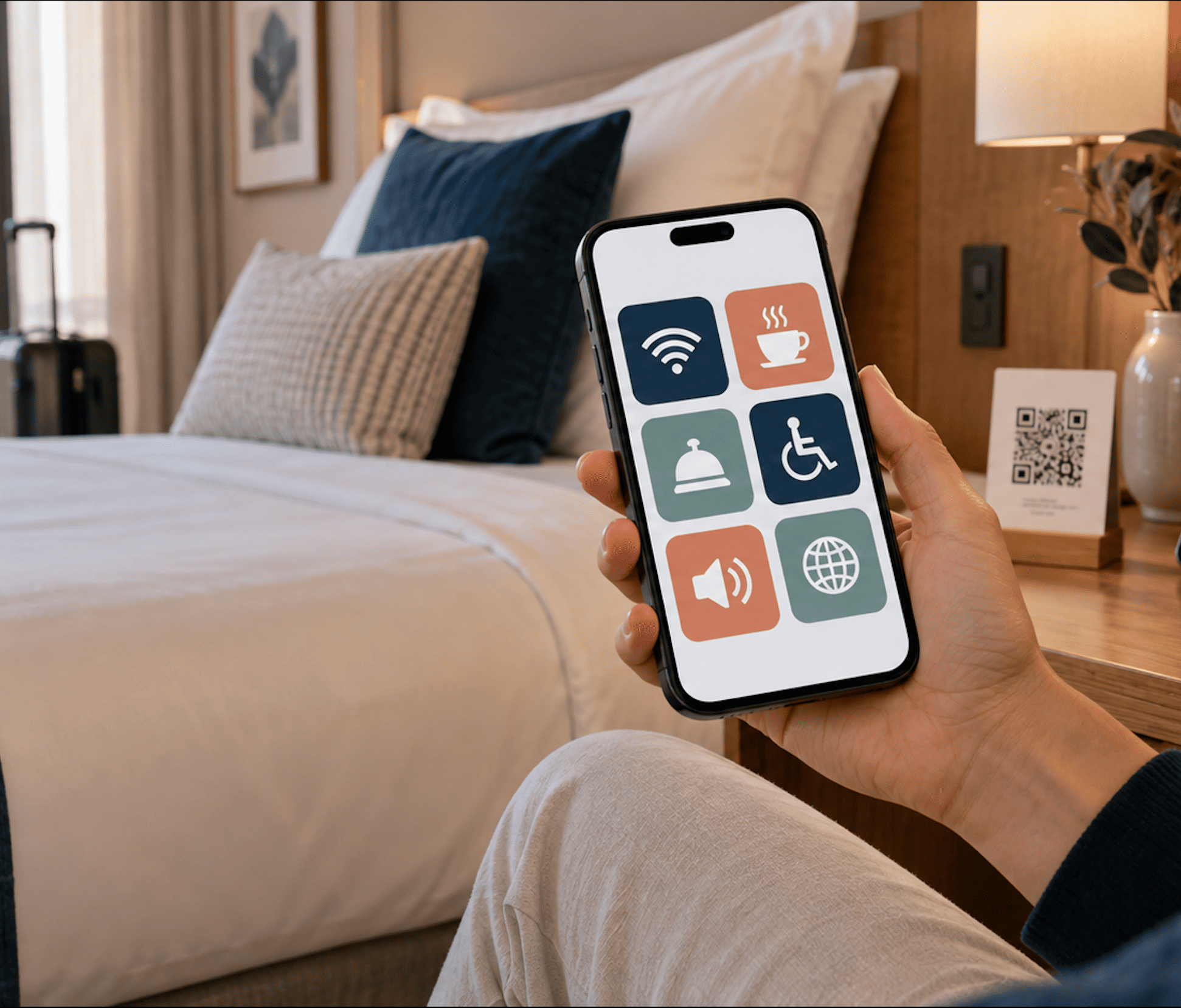
Instant messaging integrated into a digital guest directory is the most accessible solution. The guest scans a QR code upon arrival or clicks a link received via SMS. They access an interface where they can make a request or report an issue without making a phone call or leaving their room. The front desk receives the message in real time and can respond, then trigger the necessary action.
The in-stay satisfaction survey is a complementary tool. It doesn't wait until the end of the stay to ask for feedback. Sent via SMS on the first night, or the morning of the second day for a three-night stay, it helps detect latent dissatisfaction. The question can be as simple as: "How is your stay going so far?" with a two- or three-level satisfaction scale. A guest who responds with a negative signal triggers an alert for the front desk.
Proactive communication during the stay also creates an opportunity for feedback. A welcome message sent a few hours after arrival, which mentions available services and offers a direct line of contact, signals to the guest that the hotel is accessible. This perceived accessibility increases the likelihood that they will report an issue rather than keeping it to themselves.
An in-stay detection system that flags issues without a processing procedure only delays the problem. The front desk must know exactly what to do as soon as a negative signal arrives.
The first principle is speed. A guest who reports an issue during their stay expects a quick response. If the front desk acknowledges the issue within minutes and offers a solution, the incident can turn into a positive experience. If the message remains unanswered for two hours, the effect is the opposite: the guest remembers reporting a problem and being ignored.
The second principle is traceability. The request must be recorded in a system where it remains open until resolved. It should not get lost in a receptionist's personal WhatsApp exchange or an undocumented verbal conversation. An open ticket, visible to the entire team on duty and closed only when the resolution is confirmed, is the minimum requirement.
The third principle is escalation. Some signals fall outside the scope of the front desk: a technical failure, a cleanliness issue, or a request for a room change in a fully booked hotel. The team must know who to contact, within what timeframe, and who will inform the guest of the next steps.
In-stay satisfaction and review management are not two separate topics. They are two sides of the same coin.
A hotel that detects signs of dissatisfaction during the stay and addresses them before departure mechanically reduces the volume of negative reviews. The reason is simple: a guest whose problem was resolved during their stay leaves with a different experience than one whose problem was ignored. And even when the problem cannot be resolved, a guest who received a quick response and sincere attention is significantly less likely to post a negative review.
Conversely, a hotel that collects post-stay reviews without having filtered out dissatisfied guests during their stay amplifies its problems. It is asking frustrated guests to put their frustration into words on a public platform. This is the most common mistake in review collection strategies. Soliciting post-stay reviews only works properly if it is preceded by an in-stay filter.
The correct sequence is as follows: detect signs of dissatisfaction during the stay, act before departure, and then solicit a review only from guests who have not expressed unresolved dissatisfaction. This filter is the difference between a review collection campaign that improves the overall rating and one that accelerates the publication of negative reviews.
Statistics on traveler behavior show that 94% of them consult reviews before booking. Preventing negative reviews upfront is structurally better than responding to them after publication, no matter how well-crafted the responses are.
Beyond incident prevention, in-stay satisfaction produces useful data over time. If several guests report, week after week, that sleep quality is poor in street-facing rooms, this repeated signal is more valuable than a quarterly survey. It points to a structural problem that the management team can address concretely.
This continuous feedback loop is a form of operational improvement that post-stay reviews do not provide. Public reviews are aggregated, anonymized, and often lack precision regarding the root causes. In-stay signals are contextualized: specific room, specific night, specific team on duty. They allow you to act on the causes, not just the symptoms.
For a hotel that doesn't yet have an in-stay system, implementation is not a months-long project. The essential elements are frictionless messaging accessible from the room, an interim satisfaction survey for stays of more than two nights, and a clear procedure for handling negative feedback at the front desk.
These three elements, when properly configured, are enough to radically change how an establishment manages dissatisfaction. The volume of negative reviews decreases. The average rating increases. And teams spend less time managing crises after departure, and more time handling requests during the stay, where their intervention has a real impact.
GetWelcom includes an in-stay satisfaction system in its offering: direct messaging accessible from the digital guest directory, satisfaction surveys during the stay, and an automatic filter that only sends post-stay review requests to satisfied guests. To see how this system works for your establishment: request a free demo at getwelcom.com.