Logiciels & PMS
Hotel marketing: digital tools that are useful for an independent hotel in 202
7
min de lecture
-
07 July 2025
.png)
This is the observation of many independent hoteliers.
Each week, a new solution promises more bookings, more visibility, more automation or more loyalty. On paper, everything seems relevant. In reality, few institutions have the time, resources or budget to multiply the tools.
The subject is therefore not to adopt all the new features on the market. The real challenge is to know which solutions have a concrete impact on your business, which meets a real operational need, and which are especially likely to add complexity.
In hotel marketing, a good tool is not the one that does the most things. It is the one that really helps to sell better, communicate better and build better loyalty.
For an independent hotel, the most useful tools are those that act on three levers at the same time: visibility, customer relationships and direct revenue.
In practice, this often comes down to a few priority building blocks: a tool to manage customer relationships, a device to support direct bookings, a way to better value your services during the stay, and tools capable of strengthening your online reputation.
The problem is not the lack of solutions. It is rather the fact that many hotels are equipping themselves channel by channel, without linking everything to a clear customer journey. As a result, tools are piling up, but the impact remains limited.
▶️ Discover 4 others Tasks to Automate to Relieve the Hotel Reception Team
Hotel marketing rarely starts with a campaign. It starts with the quality of your customer base and your ability to communicate at the right time.
Many hotels already have useful information on their customers, but it remains scattered between PMS, emails, stay histories or habits known only to the team. Until this data is organized, it becomes difficult to segment, personalize, or relaunch intelligently.
That is why a tool for Customer relationship management is often one of the first building blocks to be structured. It allows you to send useful communications before, during and after the stay, without relying solely on the availability of the reception.
The point is not only to save time. Above all, it's about making communication more regular, more consistent and more relevant.
Automating customer relationships Is one of the most cited subjects, but also one of the most misused.
In many hotels, it is still perceived as a simple system for sending emails. However, its interest is broader. It is used to prevent repetitive tasks from continuing to mobilize the team when they could be triggered automatically at the right time.
Booking confirmation, pre-stay email, welcome message, welcome message, welcome message, welcome message, reminder after departure, request for an opinion... all these actions make sense when they are well integrated into the customer journey.
Automation becomes really useful when it makes it possible to better inform the customer while giving back time to the teams.
Many hotels still focus on a large part of their acquisition on OTAs. This is often necessary to gain visibility, but it is not enough to build a sustainable strategy.
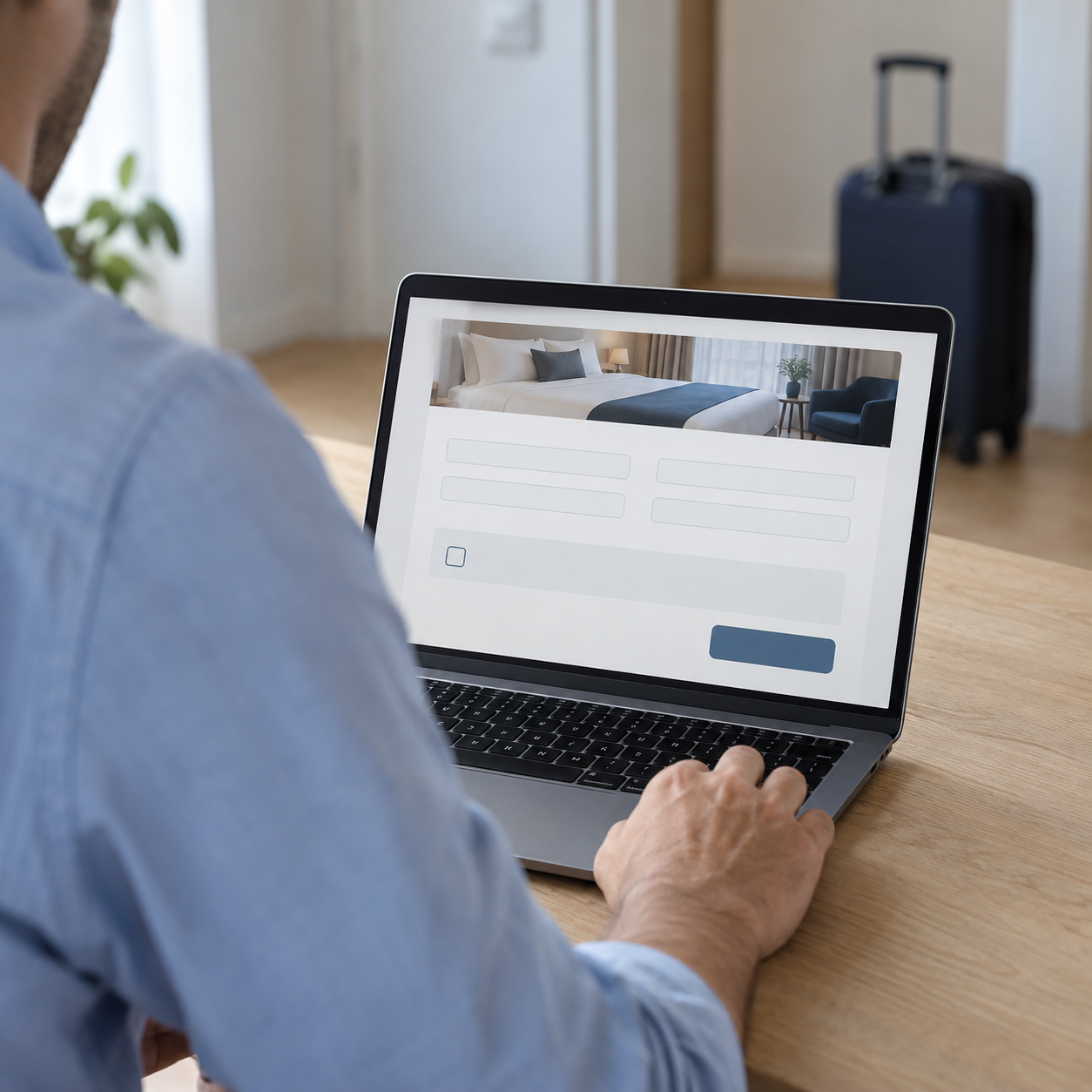
In the Long Run, Hotel Marketing Becomes More Profitable When You Succeed in Turning Some of That Visibility Into Direct bookings. This requires several things: a clear site, an efficient booking engine, smooth navigation on mobile, and a promise that is legible enough to make you want to book directly.
The subject is not about opposing OTA and direct. The subject is to avoid depending only on a channel that is still expensive.
Independent hotels often tend to want to be Present Everywhere : Google, Instagram, Facebook, newsletters, blogs, blogs, blogs, sponsored campaigns, booking platforms, comparators.
The risk is to devote a lot of energy to it without real coherence.
A more effective strategy generally consists in first consolidating the fundamentals: a credible site, a well-maintained Google listing, a clear presence on networks where your customers are really active, and some useful content that reinforces your visibility over time.
More commonly known as price comparators, meta engines aggregate information from different sources allowing travelers to compare rates and availability on the same interface. In the tourism ecosystem, the best known are Google Hotel Ads, TripAdvisor, Kayak and Trivago.
Even if they are not strictly speaking reservation systems, some of them - including Google Hotel Ads - still include a link to the hotel's reservation engine. Moreover, the CPA (cost per acquisition) is, in general, lower than that of OTAs.

Increase the visibility of your hotel through social networks
Digital marketing is not a race for presence. It is a work of coherence between your channels.
Reviews aren't just about reputation. They have a direct effect on conversion, the credibility of your establishment and the final decision of the traveller.
For this reason, the tools that allow Centralize, Track and Process Reviews have a real place in your marketing stack. Not only because they make it easier to respond, but above all because they make it possible to identify weak signals, recurring irritants and strengths that need to be highlighted more.
A hotel that works well on its reviews also works on its acquisition.
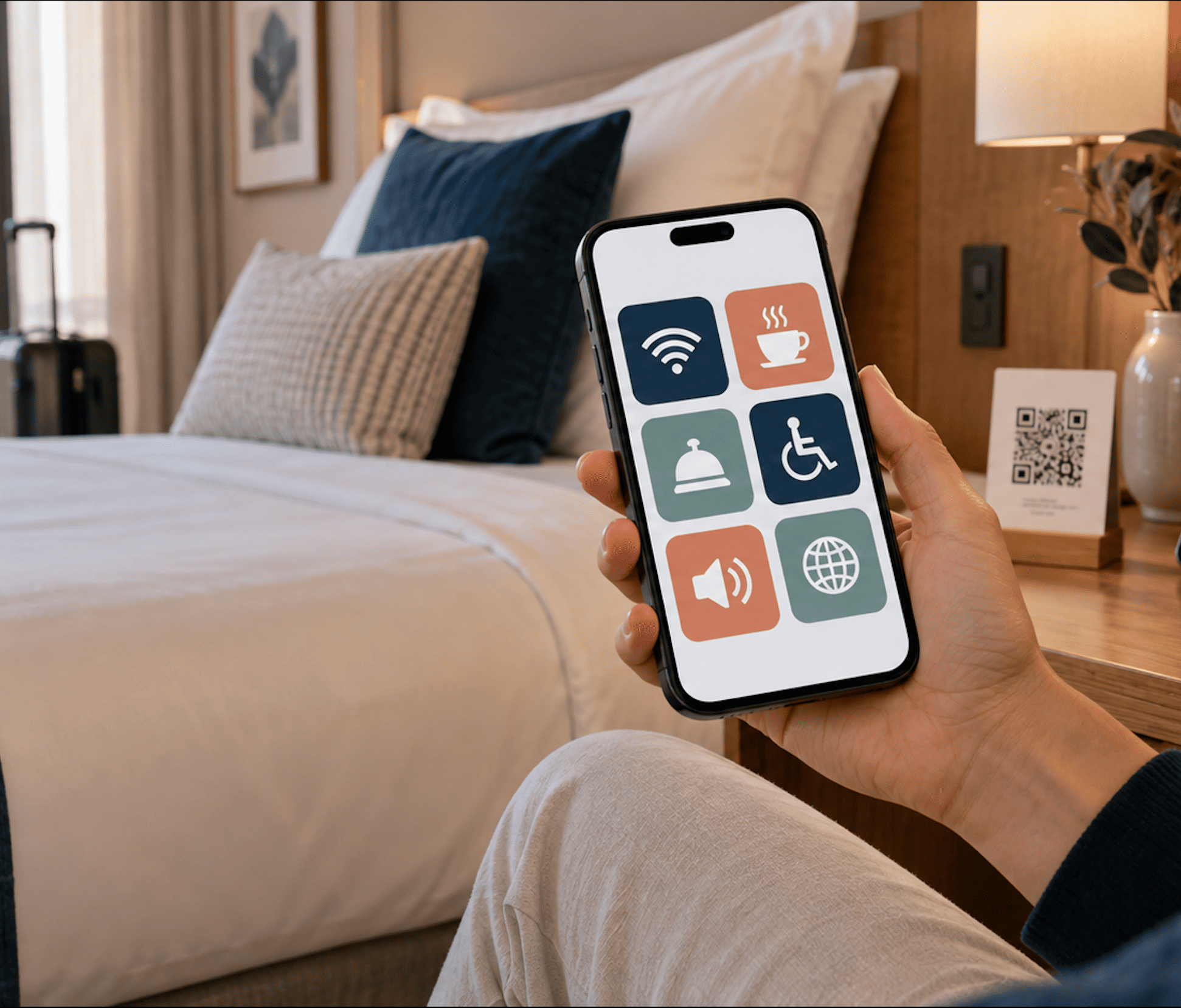
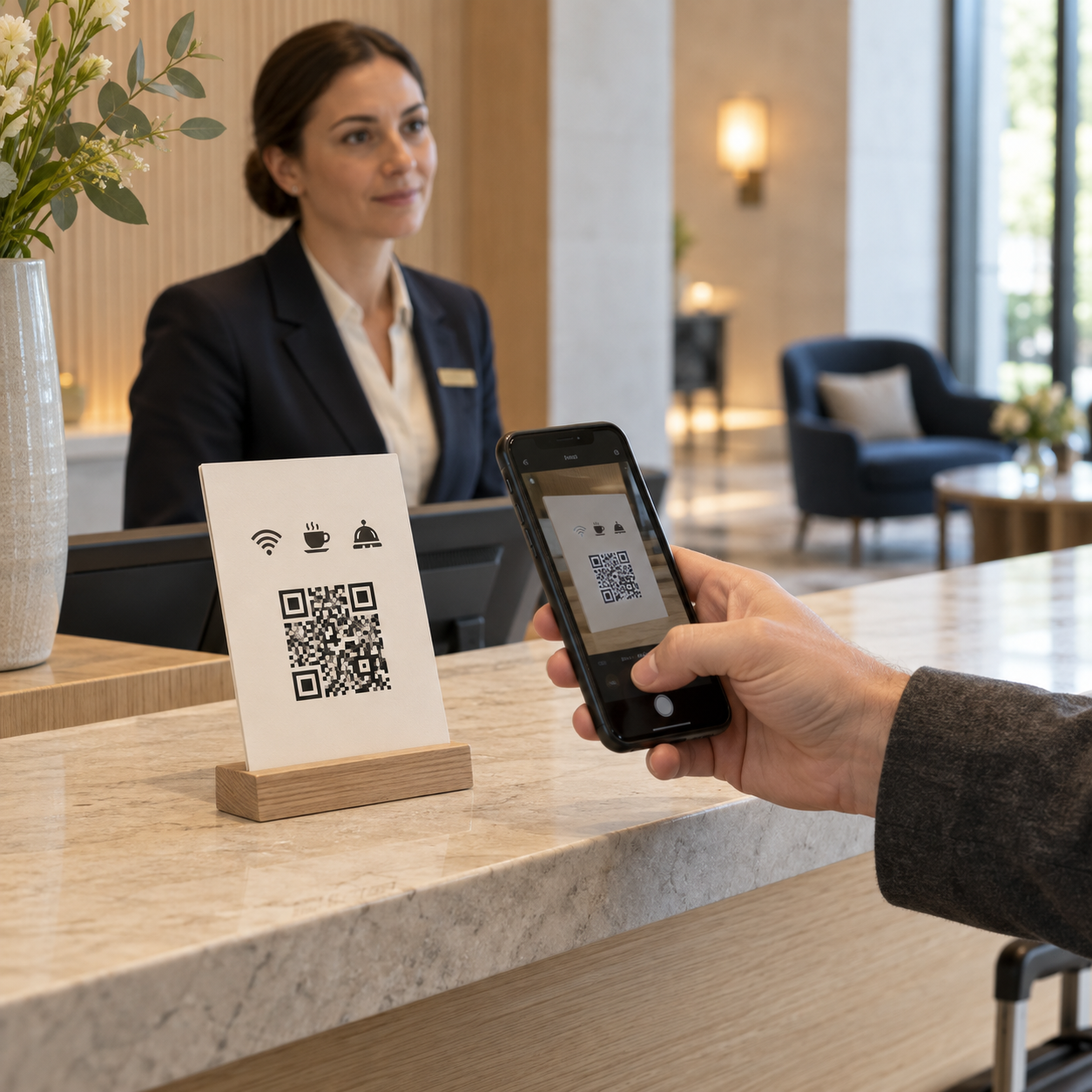
Many Hoteliers Are Still Tidying Up The Room directory in the category of home supports. However, when it is digitized, it also becomes a very concrete marketing tool.
It makes it possible to make services visible, to enhance the value of extras, to better circulate information and to create contact points during the stay. This is particularly useful in establishments where part of the additional turnover depends on the ability to present the right services at the right time.
So it's not just a customer experience topic. It is also a subject of commercial visibility within the stay itself.

When we talk about hotel marketing, we often think of acquisition, visibility or communication before booking. However, a significant part of the performance comes after the initial purchase.
Breakfast, upgrade, late check-out, activities, room service, partner services... all these revenues do not depend solely on the offer. They also depend on how it is presented.
The useful tools are therefore those that make these services legitimate, accessible and activatable effortlessly.
Hotel marketing doesn't end with the reservation. It continues throughout the stay.
These tools can be useful, but they rarely come first.
A poorly configured chatbot won't improve your customer relationship. An AI-assisted content creation tool won't make up for an unclear site or a non-existent communication strategy. A new technology is secondary if the foundations are not solid.
On the other hand, when a hotel has already structured its communication, direct bookings, reputation and additional services, these building blocks can become interesting to go further.
The right order is often this: first the fundamentals, then the optimizations.
The main criterion is not functional richness. It is the ability of a tool to be integrated into your real functioning.
Before investing, it's helpful to ask yourself three simple questions:
A good digital tool is not an impressive tool. It is a used tool.
Hotel marketing in 2026 is more than just buying more tools. It consists in structuring the right levers: getting to know your customers better, communicating better, strengthening direct bookings, improving visibility and promoting services that generate revenue.
For an independent hotel, the challenge is less technological than strategic. It is about building a simple, coherent and truly usable ecosystem on a daily basis.

If today your marketing tools are scattered, if your communication is still very much based on manuals and if your services are not very visible during the stay, there is probably a significant margin for optimization.
Adding one more tool is not the right place to start.
It's about identifying those who will have a real impact on your customer relationship, your revenue and your organization.
GetWelcom helps hoteliers structure these key touchpoints, by combining CRM, automation and guest apps in a simpler and more profitable customer journey logic.