E-réputation et communication
Digital Hotel Check-in and Check-out: The Complete Guide
4
min de lecture
-
28 May 2026
2 PM, a Friday in July. Five guests are waiting at the reception. The receptionist is re-entering data into the PMS while a guest hastily signs a registration form. The next guest's room isn't ready yet. The phone rings. No one answers.
Every hotel manager knows this moment. And every guest who experiences it is left with an impression, rarely a good one.
However, it's not a team problem. It's a process problem. The traditional check-in focuses on a single moment, at the worst time of day, all the administrative tasks that could have been handled well in advance.
The good news is: this problem has a practical solution, implemented today in hundreds of French establishments. And its results are measurable.
Key takeaways:
Paper check-in was not designed for the current pace of the hotel industry.
When it was developed, reception teams were larger, guests were less rushed, and flows were more predictable. Today, staff shortages, rising traveler expectations, and the proliferation of booking channels have changed everything.
What traditional check-in really costs a hotel:
The problem isn't the receptionists' competence. It's that the process forces them to handle administrative tasks at the exact moment guests need human attention.
To understand how hotel check-in has evolved and what hoteliers expect from it today: a comprehensive overview of hotel check-in.
The online check-in is often reduced to an email form. This is too narrow a view. A well-designed digital process covers the entire customer journey, from pre-arrival to departure.
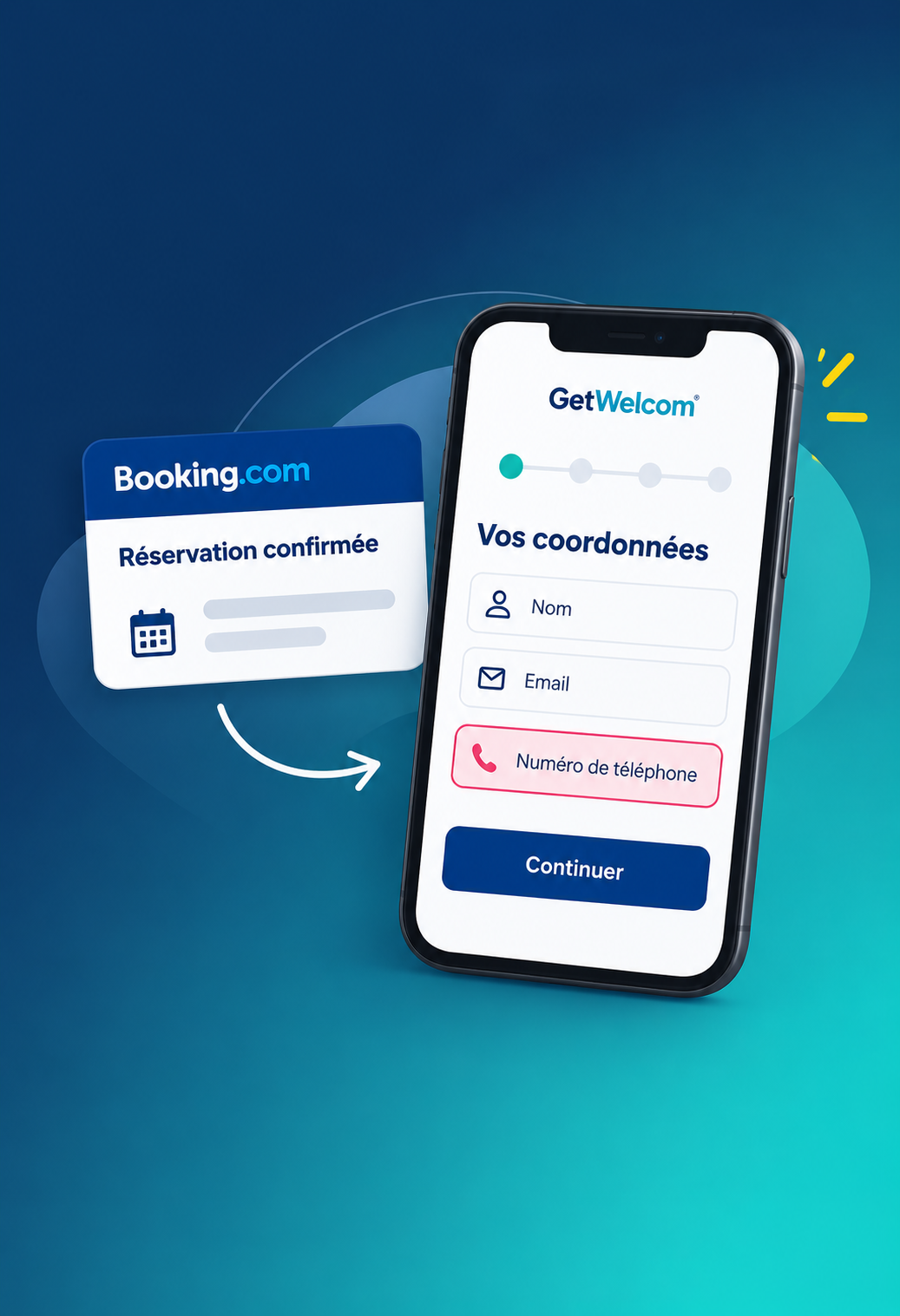
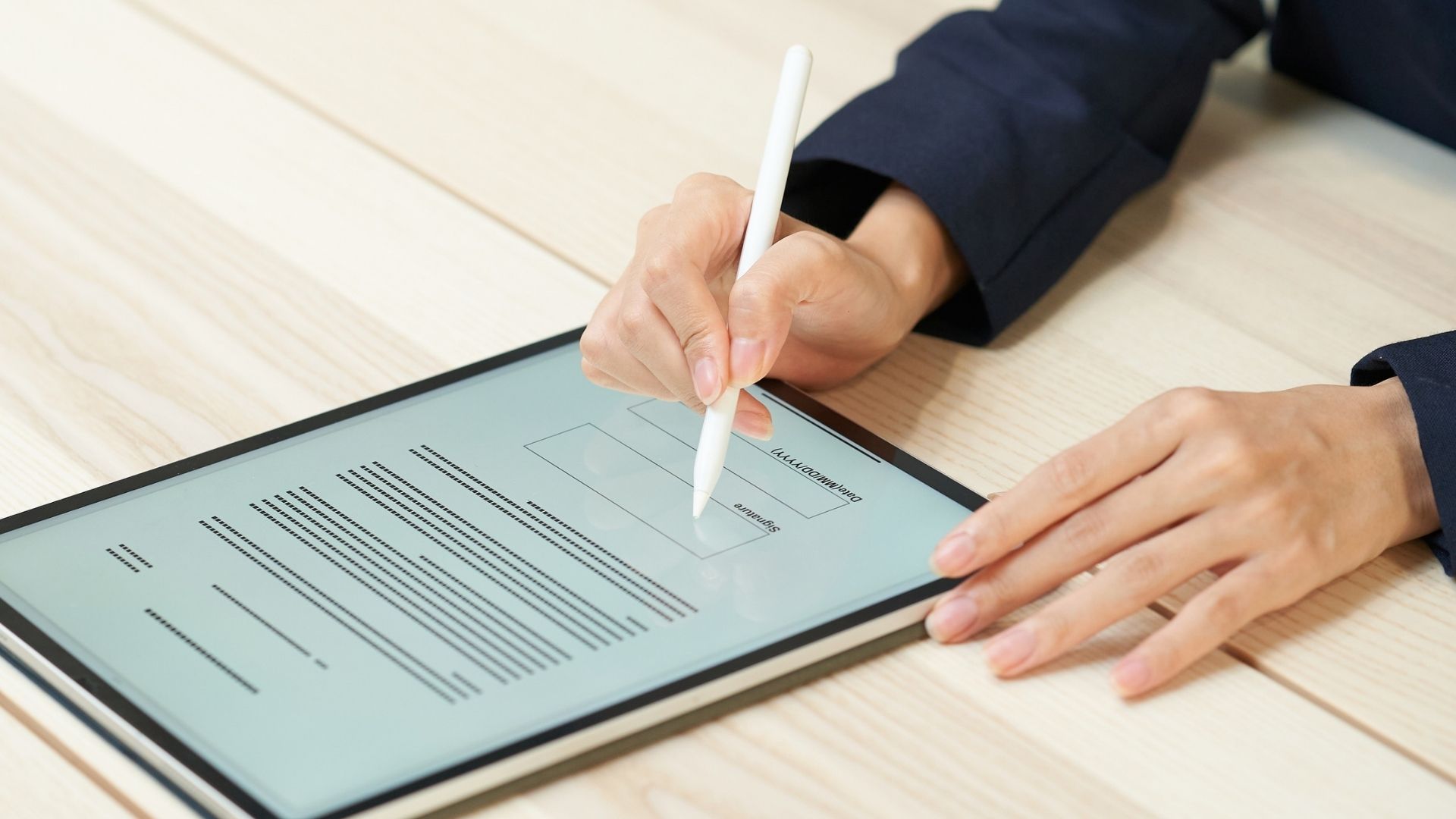
The guest automatically receives an email, SMS, or WhatsApp message, branded with the property's image, inviting them to complete their online check-in. With a few clicks on their phone, they fill in their personal information, sign electronically, and can indicate their stay preferences.
This quiet moment, from their sofa or office, is infinitely more conducive to thorough and accurate data collection than the reception desk on a Friday at 2 PM.
The receptionist accesses a dashboard which shows them in real-time which guests have completed their check-in and which are pending. The information is automatically synchronized with the PMS. The guest registration cards are generated and stored without manual intervention.
The welcome becomes what it should always be: a moment of attention, not paperwork.
For guests who haven't completed their check-in beforehand, the process can be finalized at reception in a few seconds, without re-entering data.
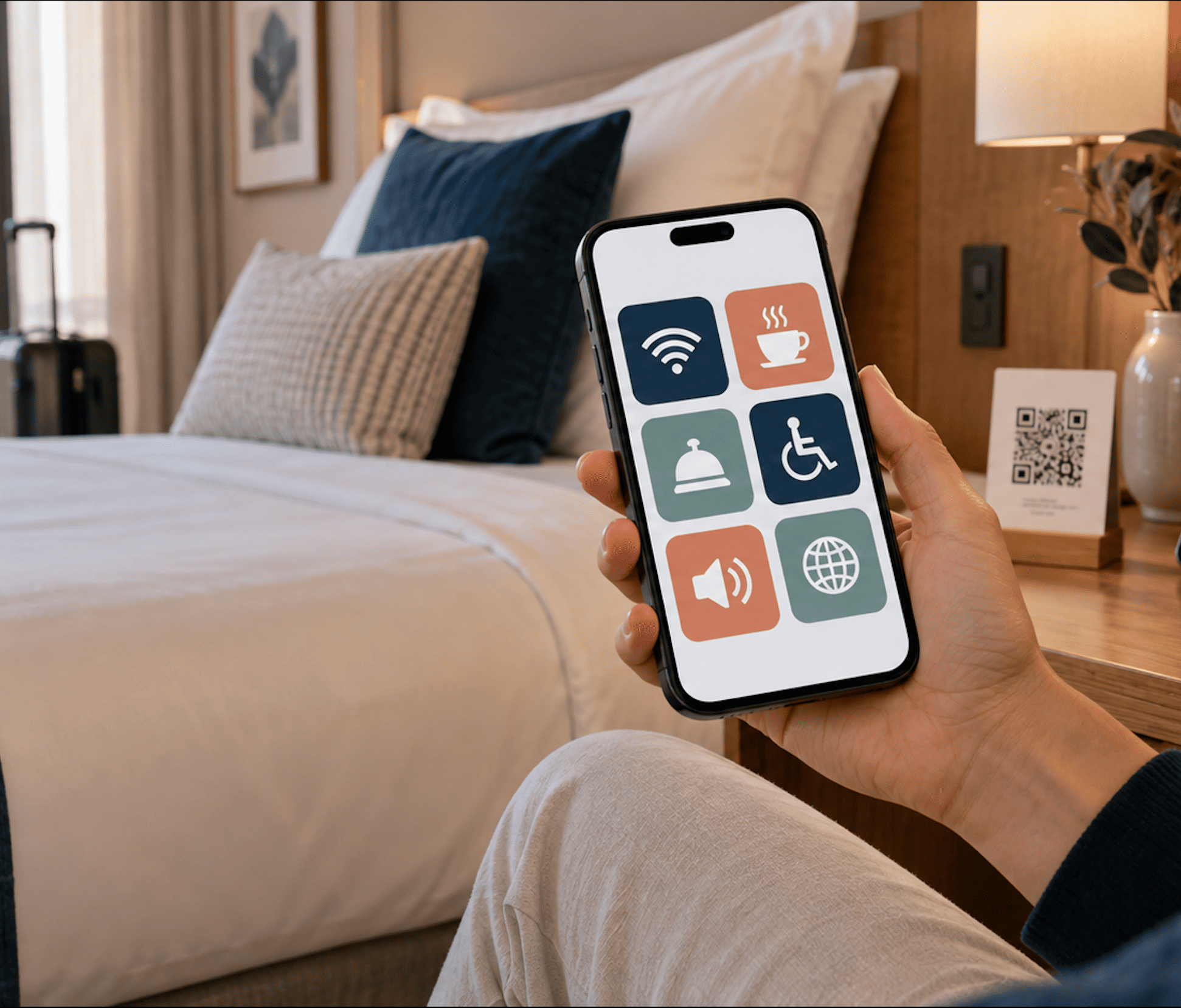
The digital check-in is not just a registration tool. It opens a direct communication channel with the guest: practical information, available services, targeted promotions, and a room directory accessible from their smartphone.
It's also an opportunity to collect email addresses from OTA guests, who often account for 70 to 80% of bookings, to include them in future loyalty campaigns.
Hotels that have implemented a structured digital check-in process consistently report results across three key areas.
On average, 8 minutes are saved per guest during check-in. In a 50-room hotel with an 80% occupancy rate, this represents more than 4 hours of administrative work saved every day during peak season.
This time is not eliminated. It is reallocated: toward guest welcome, customer relationships, and higher-value tasks that teams rarely have time to focus on.
In well-configured properties, 80% of check-ins are completed before arrival. This means that 8 guests out of 10 walk through the door with their file already processed, their registration form already signed, and their preferences already known.
The front desk no longer manages a flow. It manages exceptions.
Bookings made through Booking.com, Expedia, or Airbnb often hide the guest’s real email address. The online check-in form allows hotels to collect the traveler’s email directly, with explicit consent. Properties using this approach recover on average 78% of OTA guest emails, which can then be activated for loyalty campaigns or direct booking offers.
The check-in form is also a commercial touchpoint. Offering breakfast, late check-out, spa access, or room upgrades while guests are calmly preparing for their stay generates significantly higher conversion rates than making the same offer at the front desk after a long journey.
Discover how hotels are using digital check-in in practice to improve guest experience and operational performance:
Check-out is the neglected aspect of hotel digitalization. Most establishments focus on arrival, leaving departures to sort themselves out.
This is a mistake. Departure is the last memory of the stay. It's when guests form their final judgment, decide whether to leave a review, and if they will return.
A queue at check-out on a Sunday morning, an invoice to correct because a service wasn't recorded, a hurried guest leaving without being asked to leave a review: all lost opportunities for loyalty, revenue, and reputation.
The day before departure, guests receive a summary of their invoice, which they can check from their phone. They can pay online if the establishment offers it. They indicate their planned departure time, which allows teams to anticipate room availability and optimize housekeeping schedules.
When it's time to leave, they don't wait. They return their key, exchange a few words with reception, and within minutes receive a thank-you email with a link to review platforms.
The digital check-out transforms an often rushed moment into a final positive touchpoint with the establishment.
For more on automating guest communication throughout the stay: hotel guest communication automation scenarios.
The main objection from hotel managers regarding digital check-in is the perceived complexity. "We don't have the resources to train staff." "Our PMS is old." "Guests won't participate."
These obstacles are real. But they are surmountable, provided you choose a solution designed for hotel operations, not for a large group's IT department.
The absolute prerequisite: the digital check-in solution must connect natively to your PMS. Without this integration, data doesn't flow, teams re-enter information, and the benefit disappears.
Before any deployment, check the list of available connectors and the depth of the integration: reservation synchronization, customer data upload, automatic generation of police forms.
Sending the check-in form must be automated. Define the optimal timing for your establishment, generally 48 to 72 hours before arrival for an email, 24 hours for a reminder SMS.
The message must be personalized to reflect the hotel's brand: tone, logo, guest's language. A generic form results in fewer completions than a message that matches your establishment.
The receptionist must be able to see the status of arrivals at a glance: who has completed, who is pending, what information is missing. This dashboard is the new front desk; it must be simple, readable, and accessible from any workstation.
Training doesn't take weeks. Current solutions are designed for quick adoption, even by teams with high turnover.
Don't limit digitalization to arrival. Configure automatic sending of the stay summary, the online payment link if applicable, and the post-departure thank-you message with a review request.
It's this complete process, from pre-arrival to post-departure, that transforms digital check-in into a sustainable performance driver, not just a technological gadget.
The check-in and the check-out are the two moments when the hotel makes the biggest impression on its guest. The first creates the initial impression. The second leaves the final memory.
When these two moments are bogged down by administrative tasks – forms to fill out, data to re-enter, queues to manage – the hotel loses on all fronts: a poor guest experience, teams tied up with low-value tasks, missed sales opportunities, and non-compliance risks.
Digitizing these two steps is not a profound transformation. It's an operational decision, deployable in a few weeks, with effects visible within the first weeks of use.
GetWelcom digitizes the entire check-in process: forms automatically sent before arrival, synchronization with the PMS, generation of police forms, an arrival dashboard, and post-stay communication. 80% of guests complete their check-in before arriving. Your teams welcome guests; they no longer handle registrations.
Would you like to see how GetWelcom integrates into your property? Discover the GetWelcom check-in solution and request a demo