Hotel trends 2026: 3 concrete developments to remain competitive
2
min de lecture
-
26 March 2025

In 2026, the question is no longer to follow trends, but to understand which ones have a real impact on your farm.
In the field, reception teams are always under pressure, customers are more demanding, and profitability increasingly depends on the ability to make good use of every touchpoint in the customer journey.
In this context, three trends clearly structure the evolution of the sector: Smart hotel, the hotel Lifestyle and the return to more entrenched, more local experiences that can be grouped together from the angle Countryside.
These trends are not theoretical. They respond directly to concrete problems encountered every day in hotels: operational overload, lack of visibility of services, difficulty in differentiating themselves.
In many hotels, the same situations are repeated every day.
Guests call to ask for breakfast times, parking access, or the Wi-Fi code. The front desk responds, repeats, manages the emergency, and has little time to create a real relationship.
This operation has a direct impact:
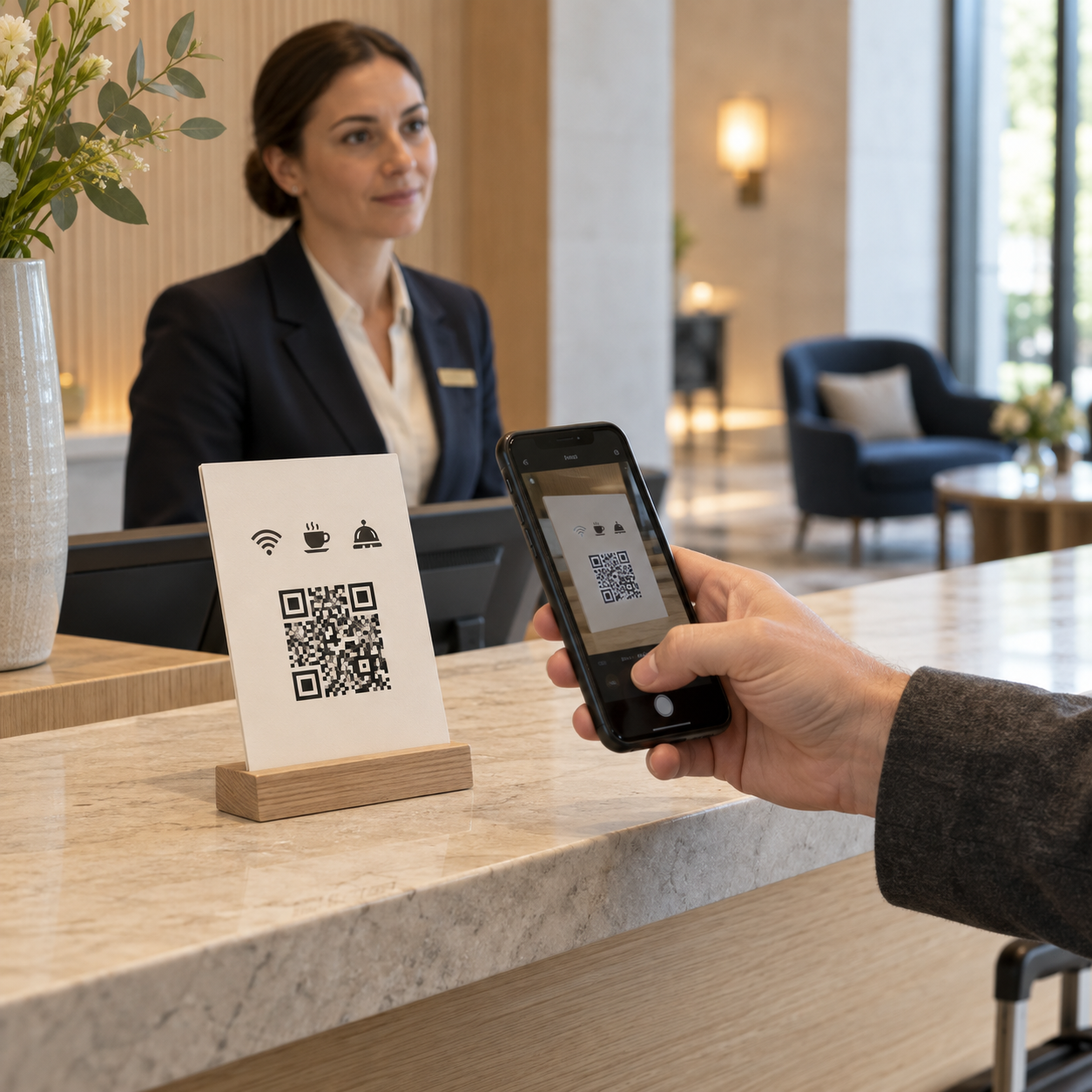
In 2026, the trend of Smart hotel is necessary because it responds precisely to these irritants. The objective is not to multiply the tools, but to make information available at the right time and to make interactions more fluid.
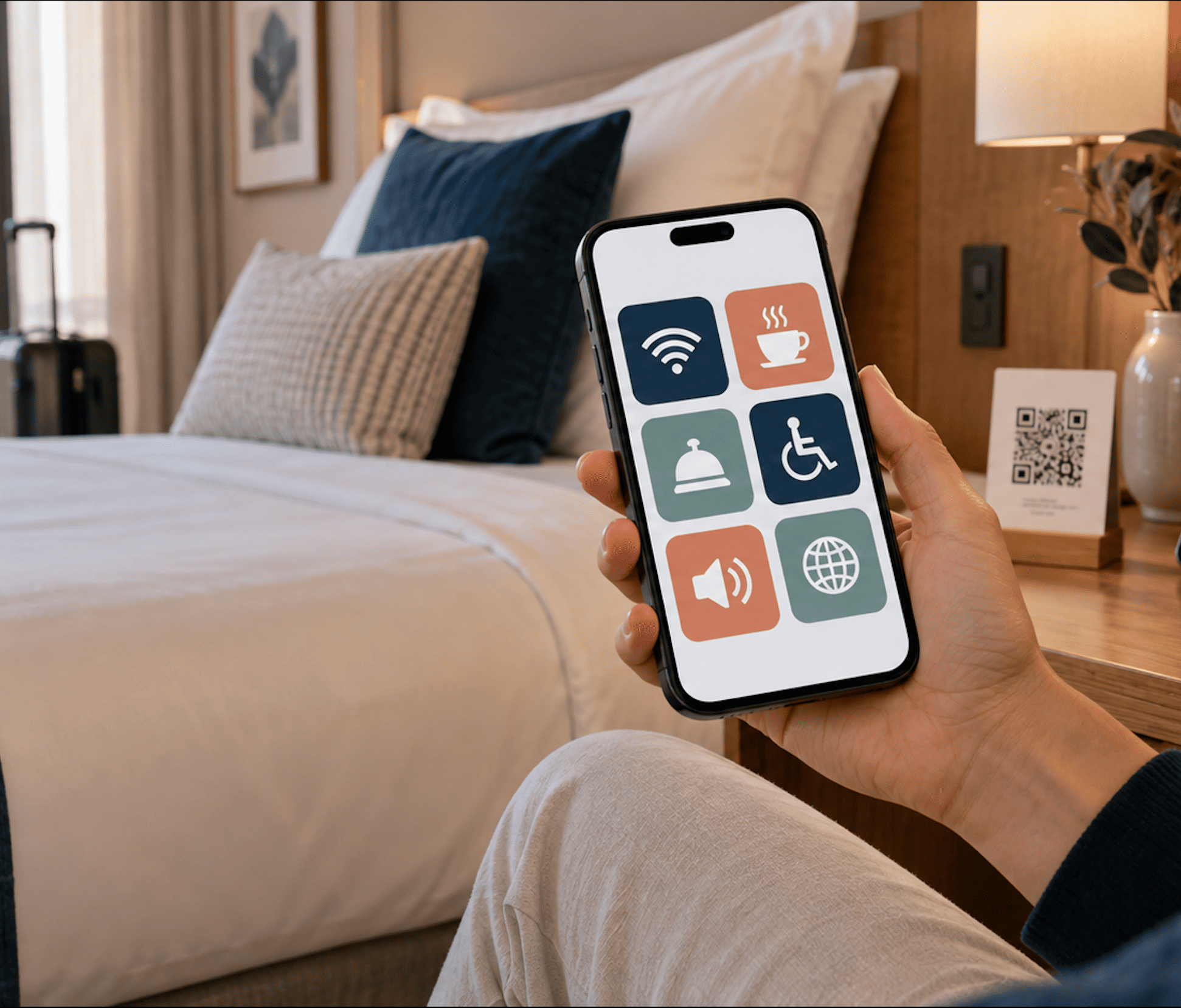
Concretely, this involves a digitized customer journey:
An establishment like the Mercure Hotel & Spa Bastia Biguglia has for example digitized its welcome booklet to allow customers to easily access services (spa, restaurant, practical information) from their mobile phones.
Result in the field: reception is less solicited for simple requests, and services are better valued.
This shift is consistent with industry analyses: AI and data are becoming concrete levers for improving personalization, reducing operational load and increasing customer satisfaction.
A hotel that limits itself to offering one room goes more and more unnoticed. In urban areas in particular, customers are looking for places where they can also work, meet, consume or simply spend time.
This is exactly what the rise of lifestyle concepts.
In these establishments, the experience is not limited to an overnight stay. The spaces are designed to be used throughout the day, and not only by hosted customers.
Concepts like JO&JOE or Mama Shelter illustrate this evolution well. There are hybrid spaces, a strong atmosphere, events, lively catering and a real openness to the outside world.
For its part, The Social Hub pushes logic even further by combining hotels, coworking and coliving.
On the ground, the impact is twofold. On the one hand, these designs create a more memorable experience. On the other hand, they make it possible to generate additional income by making better use of common areas.
For an independent hotel, the objective is not to reproduce these concepts identically. Rather, it's about asking yourself a simple question: What does my hotel bring to life, beyond the night?
This can be done by:
At the same time, another trend is growing strongly: the need to slow down, to reconnect to a simpler, more natural, more local environment.
This movement is not only about hotels in the countryside. It reflects a more global expectation: to have a meaningful experience.
Actors like Coucoo Cabanes offer a complete immersion in nature, with accommodations designed to limit the environmental impact while offering a strong experience.
On a different note, Eklo Hotels democratizes ecological hotels with an accessible and structured approach based on sustainability.
The MOB HOTEL illustrates a more global approach, combining ecology, social commitment and living space.
What is changing in 2026 is that sustainability is no longer enough as a discourse. Customers expect concrete evidence and a global consistency of experience.
For a hotel, this means:
A hotel that highlights its local partners, its products, its activities or its environment creates a more memorable experience without necessarily investing massively.
These three trends should not be treated separately. They work together.
A hotel can offer a strong local experience, but if the information is difficult to access, the experience will be degraded. Conversely, a hotel that is highly digitized but without a clear identity will remain interchangeable.
Here's how to connect them operationally:
The challenge is therefore not to add layers, but to build a coherent journey.
Concretely, in 2026, the most efficient hotels are those that simplify their operation while enriching the experience.
This is reflected in very visible changes:
These developments do not necessarily require major transformations. They are based above all on a better organization of the customer journey and a smarter use of digital tools.
In this logic, GetWelcom is registered as a Digital co-pilot of the hotel customer journey. The objective is not to add one more tool, but to structure communications, make services visible and simplify the daily life of teams while improving the customer experience.
Request a GetWelcom demo to see concretely how to apply these trends in your establishment.