Parcours client
Smart Hotel: what technology is really changing in a hotel
5
min de lecture
-
03 August 2024
.png)
A Smart Hotel - also called a “smart hotel” in French - places technology at the heart of customer promise. How do these connected hotels use the Internet of Things, artificial intelligence, and other innovations within their hotel establishment? Why are travelers seduced by this concept in 2024? What are the benefits of adding a dose of technology to hotel services? These are all questions that we answer in this article on Smart Hotels 🏨.
.png)
A Smart Hotel is a hotel establishment that integrates advanced technologies to offer a new and personalized customer experience. Thanks to the Internet of Things (IoT), artificial intelligence (AI) and automated management systems, smart hotels offer innovative services in the service of the comfort and well-being of travelers. Connected rooms, virtual concierge services, contactless access are examples of services that you will find in a connected hotel in 2024 👨💻.
👉 Traditional Hotel vs Smart Hotel: What is the difference?
Unlike traditional hotels, Smart Hotels offer an ultra-connected experience. Administrative tasks, such as check-in and check-out, are automated, reducing waiting times at the reception. Customer data is used to anticipate the needs of travelers and offer them personalized services.
Thus, by combining technology and quality of service, Smart Hotels stand out strongly from traditional hotel concepts, especially among young people called “digital natives” or “millennials”.
We often associate the Smart Hotel with a very technological, almost futuristic place. In reality, the most successful establishments are rarely the ones where technology is the most visible.
What makes the difference is how it fits into the customer journey.
A hotel becomes “smart” when the customer moves forward effortlessly. He finds his information easily, understands how to access services, and doesn't need to ask the front desk for simple things.
On the team side, the change is just as concrete. The time spent repeating information is decreasing. Interactions are becoming more qualitative. Everyday life is less fragmented.
Technology is almost disappearing. Fluidity, on the other hand, is becoming obvious.
Smart Hotels managers invest differently in new technologies. It depends on the type of customers and the services requested. Among the most popular in 2024, you will find:
An already long list that should increase even more in the years to come, especially with the development of artificial intelligence associated with robotics 🤖🧠🇦🇮👾.
Example of the Smart Hotel: the YOTEL in New York
No wonder a city like NYC 🗽 has several connected hotels. Among them, the YOTEL which stands out for its futuristic concept.
.png)
At YOTEL, everything (almost) is connected. Guests check in and out of the hotel via self-service kiosks or a mobile app. Smart rooms are equipped with adjustable beds, ambient lighting controlled by tablets and advanced entertainment systems (connected televisions, very high speed Wi-fi...). In the common areas there are motion sensors for light and air conditioning. Living spaces, such as coworking spaces, the gym, lounges and terraces, are equipped with the latest technology. And what particularly attracts the attention of travelers is the presence of a robot janitor named “YOBOT” who manages luggage storage 🦾🧳.
We often associate the Smart Hotel with a very technological, almost futuristic place. In reality, the most successful establishments are rarely the ones where technology is the most visible.
What makes the difference is how it fits into the customer journey.
A hotel becomes “smart” when the customer moves forward effortlessly. He finds his information easily, understands how to access services, and doesn't need to ask the front desk for simple things.
On the team side, the change is just as concrete. The time spent repeating information is decreasing. Interactions are becoming more qualitative. Everyday life is less fragmented.
Technology is almost disappearing. Fluidity, on the other hand, is becoming obvious.
The most common reflex is to add technological building blocks, one by one. A terminal here, a messaging tool there, sometimes an application.
Individually, these solutions work. But without the big picture, they don't really transform the experience.
The customer does not always know which channel to use. Information is sometimes available, but scattered. Teams have to navigate between several tools without real continuity.
Under these conditions, technology adds complexity instead of removing it.
Hotels that are doing well adopt a different logic. They start by looking at the real customer journey. Where are the friction points? When does the customer hesitate, wait, or seek information?
This discrepancy is more broadly in line with hotel trends in 2026, where technology alone is no longer enough to create value.
Only then do they introduce the technology in a targeted manner.
The most visible gains don't come from the most spectacular innovations. They appear in very simple moments, which are often underestimated.
Arrival, for example, remains a sensitive point. After a trip, the customer does not want to wait or repeat information that has already been provided. When he can arrive and access his room quickly, the stay starts in good conditions.
A little later, during the stay, the question is no longer whether the hotel offers services. Most establishments have a rich offer. The subject becomes access to this offer. If the customer has to search, ask for, or navigate between multiple devices, there is little chance of them going to the end.
On the other hand, when information is accessible in a few seconds from your phone, the perception changes. The customer discovers the services effortlessly. He is more easily familiar with the proposed experience.
This is often when local consumption evolves.
Many travelers are keen on the services offered by Smart Hotels for several reasons 🔽.
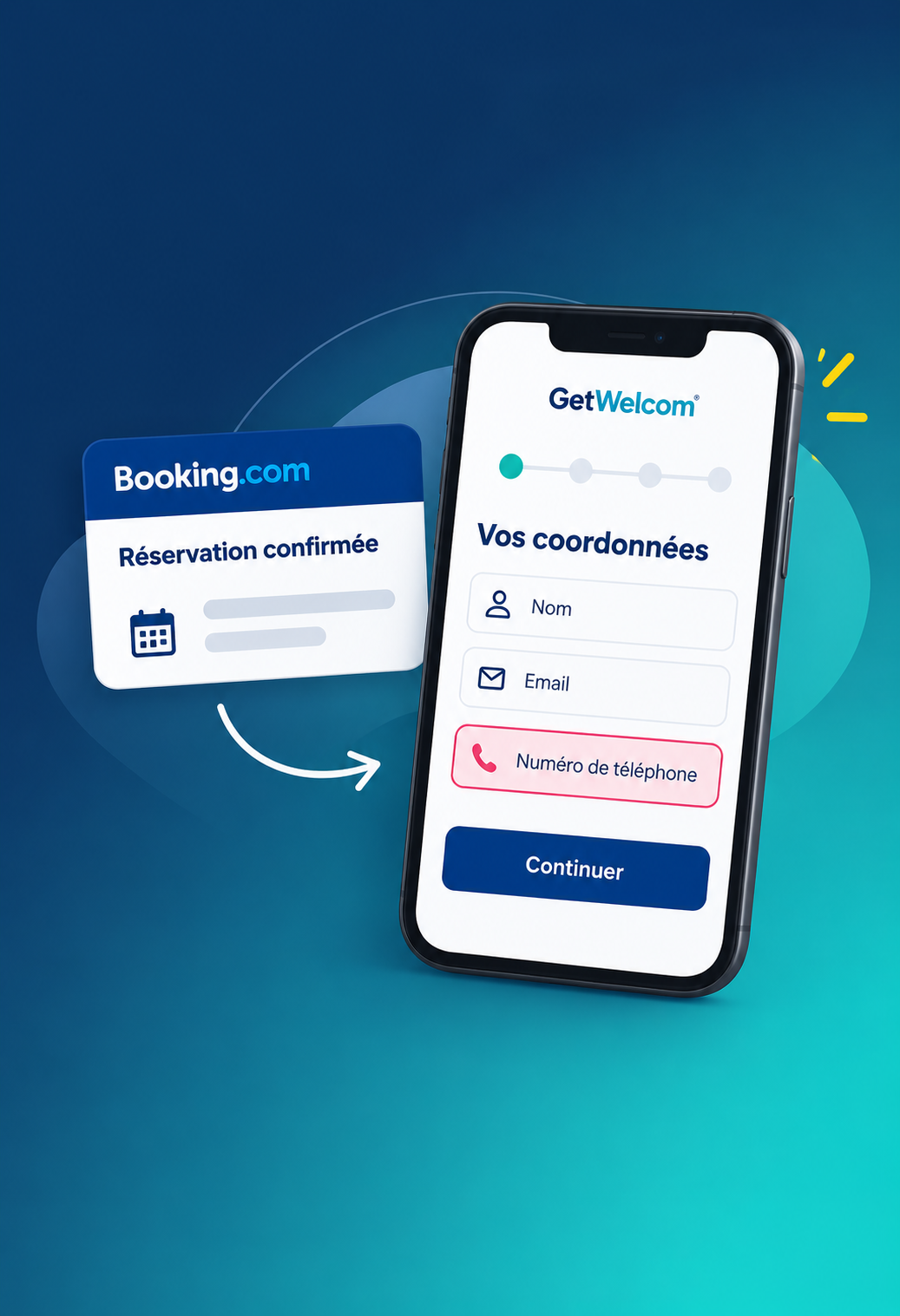
Spending more time enjoying your stay than dealing with administrative procedures: this is the first advantage of a Smart Hotel. With dematerialized services such as online check-in and check-out, room service via smartphone or virtual concierge services, customers no longer need to wait for a staff member to be available ⏳.
Plus, their issues are resolved more quickly. Thanks to instant messaging tools, communication between customers and the team becomes smooth. The response to their needs is almost immediate.
The possibility of personalizing your stay is another major asset for customers. In their room, they adjust the atmosphere by adjusting the lighting or the temperature by simple voice command or via a mobile application. Options that allow them to regain the same level of comfort as at home, or even better.
They can also organize their activities without leaving their hotel room. Via a digital welcome booklet, a room directory or a guest app to download on their phone, hotel customers consult the hotelier's recommendations. Restaurant addresses, visits, shows and other good deals that meet their expectations are therefore within reach 📲.
.png)
Opening a Smart Hotel is not just about modernizing the image of your establishment by adding a touch of connectivity and robotics. The benefits are much wider ✨.
At first glance, equipping a hotel with new technology might seem expensive. Except that in the long term, the return on investment allows you to save money 💰. Smart Hotels managers automate numerous administrative tasks, such as check-in and check-out, reducing the need for staff at these positions. They install smart control systems that reduce water and electricity consumption, as well as device failures. These are all examples that prove the financial benefits of integrating such devices.
It's not easy to adapt to the desires of each guest in a hotel where dozens, if not hundreds, of travelers come and go every day. Thanks to technologies that have the ability to analyze thousands of pieces of information in record time, smart hotels provide tailor-made services. This ultra-personalization, which gives the host the impression of living a unique stay, is an incomparable argument for promoting positive reviews and recommendations 👍.
Technology also enhances the security of the institution. It makes it possible to monitor entrances, car parks and common areas. Property and people are thus better protected.
Thanks to data analysis, Smart Hotels offer targeted services and offers 🎯. In the same way that it affects the customer experience, the personalization of the stay favors the propensity of travelers to spend more. A boon for boost upselling and cross-selling turnover in your hotel.
💡 Transforming a traditional establishment into a Smart Hotel cannot be done in a snap of the fingers. This is why we recommend that you start by equipping your hotel with solutions that require little investment, such as a guest app or an online check-in solution. Those of GetWelcom have allowed hoteliers like you to revolutionize their customer service in a simple and effective way.
The effects are not always immediate in dashboards, but they can be felt quickly in the field.
A customer who has a smooth experience remains more available. He is more attentive to what the hotel offers. It better understands the value of services and is more easily projected into their use.
In this context, offering a complementary activity, service or option becomes more natural. The decision is no longer based solely on price, but on the quality of the overall experience.
This explains why two hotels with a similar offer can achieve very different results.
One offers services.
The other really integrates them into the customer journey.
There is a strong temptation to want to modernize the entire establishment at once. In practice, this is neither necessary nor effective.
The most relevant transformations often start with specific points. Customer arrival, access to information or communication during the stay are generally the first levers.
They are also the ones that produce the most rapid effects, both on the customer experience and on the internal organization.
By moving forward in stages, it becomes easier to adjust, measure impacts and build a coherent journey.
It is a feedback that we often hear after a few months.
An establishment gets equipped, modernizes its image, installs a terminal or an application. The intention is good, and so is the investment. However, in practice, daily operations remain very similar to what they were before.
The reception desk continues to be asked simple questions. Customers are still asking for the same information. Services remain underutilized, despite their quality.
This discrepancy creates a sense of frustration. There's an impression of having changed the hotel, without it truly being felt in the customer experience or in the results.
It's not a technology problem. It's a problem of usage, in a context where The customer expectations have evolved