Logiciels & PMS
Digitalized In-Room Services: Simplify Requests and Save Operational Time
5
min de lecture
-
06 December 2026

It's 11 PM. The front desk is staffed by a single agent. In ten minutes, three calls come in: room 214 wants extra towels, room 307 wishes to order a sandwich, room 118 asks what time breakfast opens. The agent answers, takes notes, relays to the correct department, and hangs up. A minute later, room 412 calls to report that the mini-bar is empty.
Each request taken in isolation is trivial. Accumulated over a night, they represent a significant portion of the front desk team's mental load and an invisible source of frustration for guests, who have to pick up the phone for the slightest request, hope someone answers, and wait with no visibility on the delay.
The phone is the sole channel for in-room services in most hotels. It's also the worst tool for this function.
From the guest's perspective, picking up the in-room phone creates a micro-friction that many avoid. Ordering a glass of wine at 10:30 PM requires active effort: finding the right number, waiting for someone to answer, verbally stating the request, and then waiting. The result: many guests refrain. They give up on ordering, they give up on reporting the problem, and they leave with a silent frustration that shows up in their online reviews.
From the team's perspective, the problem is symmetrical. Every incoming call to the front desk interrupts another task. The agent receives the request, interprets it, notes it down, and must transmit it to the correct contact; housekeeping, kitchen, concierge. If the transmission is verbal, the risk of error or oversight is real. If it's done by paper or radio, it's extra time and an additional step. And if the agent is busy when the phone rings, the request waits.
This channel forces an artificial centralization of all requests to the same point of contact, regardless of their nature. A towel request and a spa reservation go through the same bottleneck.
Digitalizing in-room services isn't about eliminating human service. It's about shifting the starting point of the request: instead of the phone, the guest uses their smartphone, via a QR code accessible in the room. No app to download. No account to create.
The request is formulated in seconds, sent directly to the correct department, and tracked in the system. The guest receives a confirmation. The team receives a notification on the right workstation. The front desk is no longer the mandatory intermediary for every interaction.
This is what the digital room directory covers, but beyond just consulting information, it's the real-time request management that transforms internal organization. For a detailed presentation of what a digital room directory is, the GetWelcom article on the subject lays the groundwork.
Ordering food or drinks in-room is the use case where digitalization generates the most visible gains. A digital menu accessible from the guest's smartphone eliminates the friction of the phone and allows for free browsing, at any time, without waiting.
The impact on revenue is direct. When guests browse a digital menu with photos, descriptions, and suggestions, their average order value is higher than an order placed verbally. Automatic suggestion modules ("customers often order with...") amplify the upsell effect without additional effort for the teams.
The order goes directly to the kitchen or bar, timestamped, with the room number. No re-transmission, no verbal interpretation, no risk of error regarding the room or the order details.
Extra towels, pillows, blankets, in-room breakfast trays, cleaning at a specific time. These requests usually go through reception before reaching the correct department. Digitalization allows these requests to be routed directly to the housekeeping team, without an intermediary.
For long stays, the benefit is particularly noticeable: guests can schedule their preferred cleaning level, indicate a time preference, or request a replenishment of amenities. All this information allows the team to plan rather than react.
This type of tracked and timestamped request also generates useful data for management: which rooms generate the most housekeeping requests, the busiest time slots, the most frequently requested items. Information that a phone call never provides.
The proportion of calls to reception related to information requests – spa hours, nearby restaurants, transport, local events – is often underestimated. These questions take up agent time for answers that the guest could obtain themselves, instantly, via a digital interface.
Integrated into the digital room directory, the concierge module allows guests to answer almost all frequent questions independently. What remains – truly personalized requests, unusual situations – can be redirected to a chat with reception or a callback request, without tying up the phone line.
The most immediate effect is the reduction in interruptions at reception. In hotels that have digitized their in-room services, the volume of incoming calls related to routine requests drops within the first few weeks. Agents regain continuity in their tasks, increased availability for high-value interactions, and a reduced mental load during low-staffed periods (night, weekend).
For other departments like the kitchen and housekeeping, the digital request is more precise, better formatted, and directly assignable. It eliminates approximations associated with verbal transmission and creates a searchable history. If a request hasn't been processed within the expected timeframe, it's visible in the system; not lost in a note or a radio exchange.
The traceability of requests also allows for team training based on real data: what types of requests come in most often, at what times, with what processing times. This is a level of management that doesn't exist with phone calls.
A few operational principles are key to successful deployment.
Access must be frictionless for the guest. A QR code printed and displayed in the room, accessible without app download, is the bare minimum. Any additional obstacle – login, account creation, device compatibility – reduces the adoption rate.
Request routing must be precisely configured before launch. An F&B order arriving at reception instead of the kitchen only shifts the problem. Workflow configuration is the step that determines most of the operational gains.
Teams must be trained not only on the tool but also on the mindset it requires. Reception staff must understand that fewer incoming calls is not a sign of low activity, but a sign that the platform is working. Resistance to change in this area often stems from a misinterpretation of new metrics.
Finally, the platform must be kept up to date. A digitized menu with outdated prices, or a service shown as available when it's suspended, generates stronger customer frustration than a mere lack of information. Ease of real-time updating is one of the criteria to check before any deployment.
Beyond immediate operational gains, digitizing in-room services changes how guests perceive the establishment. A hotel that allows guests to order, report issues, or make requests from their smartphone, in thirty seconds, at any time: sends a clear signal about its level of modernization.
This signal influences online reviews. It influences word-of-mouth. And it influences the decision to return: a guest who experienced a smooth stay, with no friction for daily requests, associates this establishment with an effortless experience. This kind of positive recall generates direct bookings rather than going through an OTA.
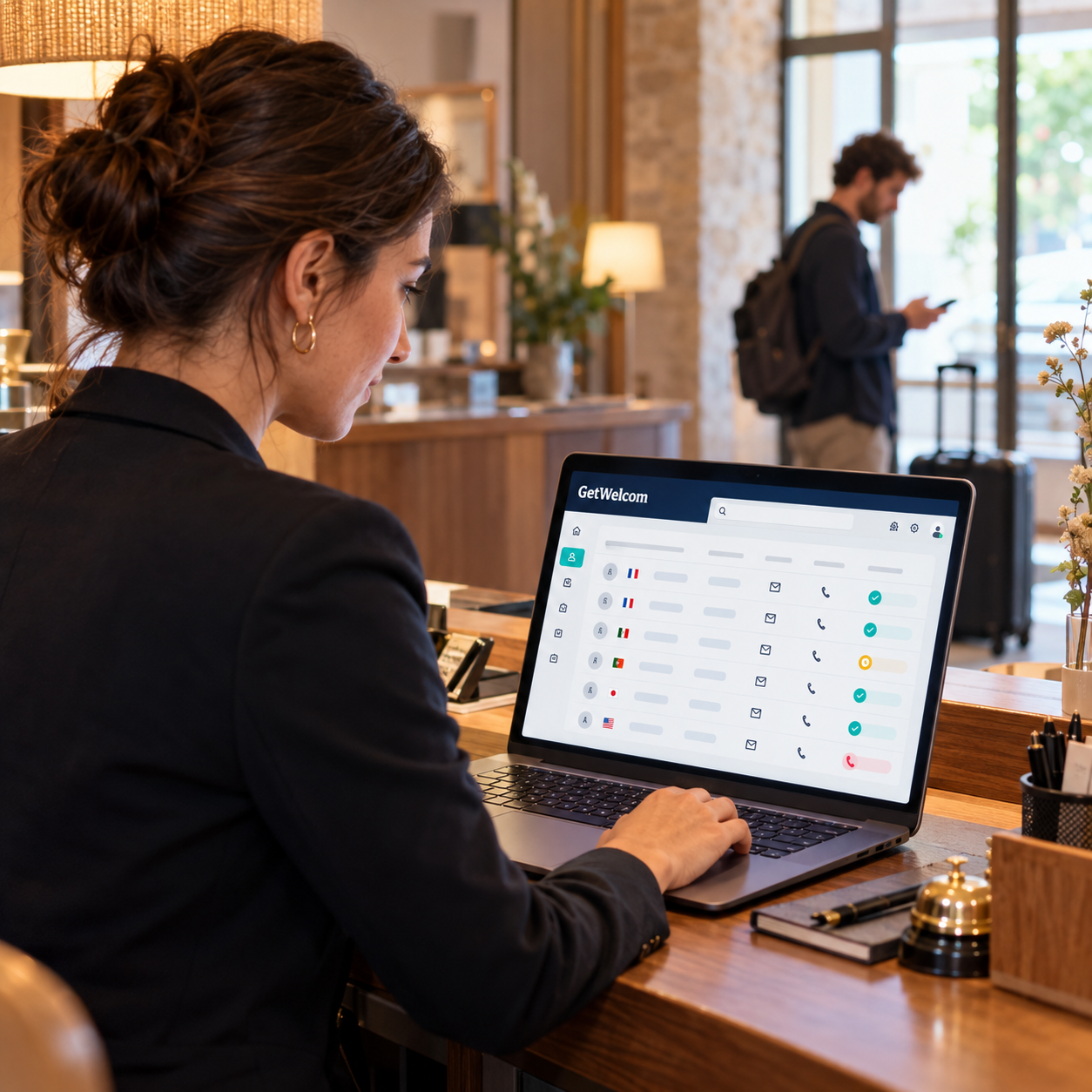
GetWelcom integrates in-room request management; room service, housekeeping, concierge services; into a mobile interface accessible via QR code, with no app to download. Each request is routed directly to the correct department, tracked, and timestamped. The front desk is relieved of routine request flows and can focus on value-added interactions.
To see how it works in your establishment: request a free demo on getwelcom.com.