Logiciels & PMS
Hotel PMS: Role, Scope, and Limitations
5
min de lecture
-
05 June 2026

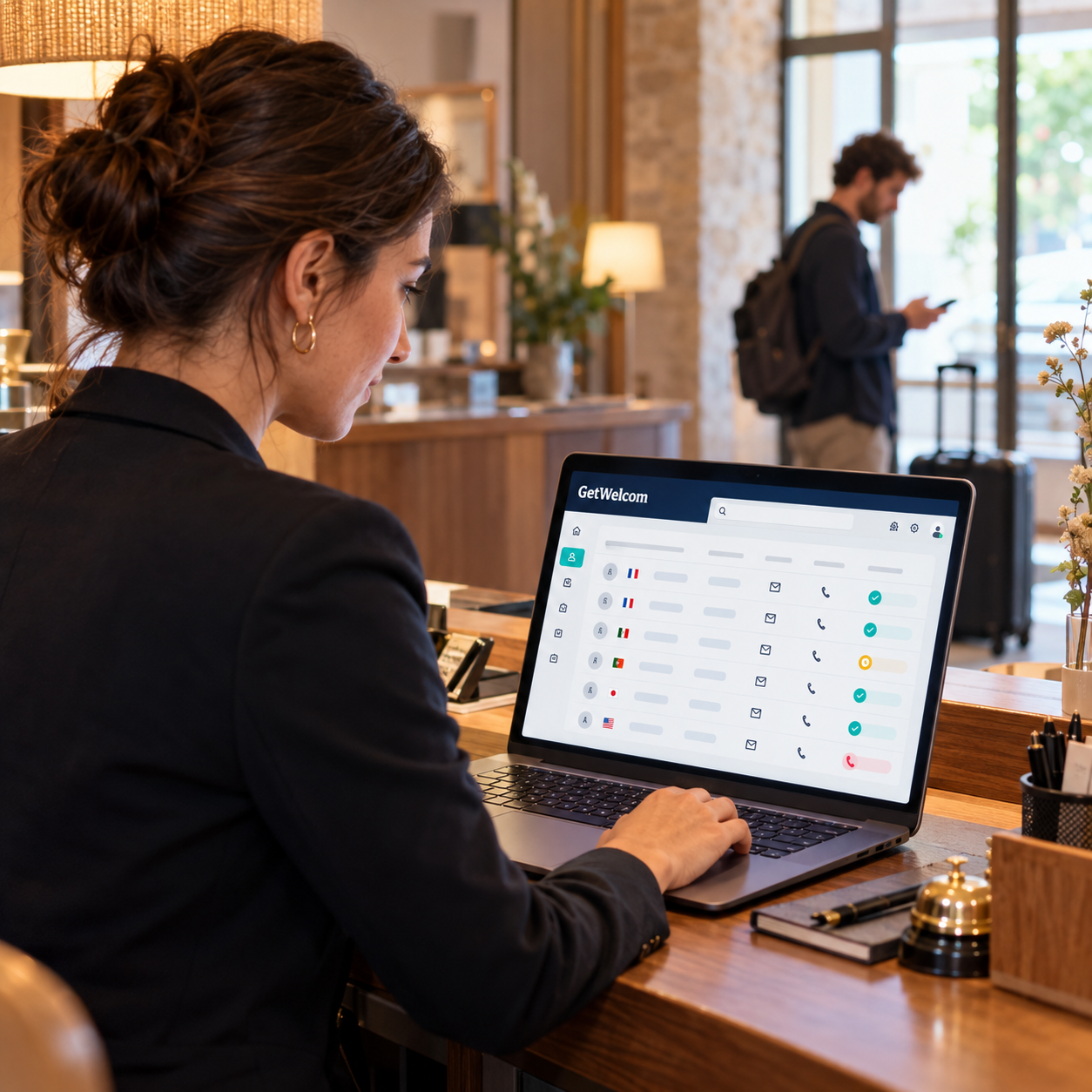
A guest calls to change their reservation. The receptionist opens her software, finds the record, changes the date, updates the room availability, and sends the confirmation. Thirty seconds, zero paper, zero errors.
Twenty years ago, this operation involved a binder, a wall planner, and a follow-up call to the sales department.
The hotel PMS is the tool that made this simplicity possible. Today, it is present in almost all establishments, from independent hotels to large chains. Yet, its definition remains unclear for many directors and managers, who sometimes attribute too many capabilities to it, and sometimes not enough.
Precisely understanding what a PMS does, what it doesn't do, and how it integrates with the establishment's other tools is what allows for building a coherent software stack and avoiding redundancies, blind spots, and unpleasant surprises.
Key takeaways:
PMS stands for Property Management System. It's the central software that allows a hotel to manage its front desk operations daily.
Specifically, it replaces all the processes that were once managed on paper or spreadsheets: room scheduling, the reservation log, billing, and tracking arrivals and departures.
A Hotel PMS is not a recent tool. The first systems appeared in the 1980s, initially in large chains before becoming widespread among independent establishments. What has changed is their architecture: modern PMS operate in the cloud, accessible from any connected device, with automatic updates and integration capabilities far superior to older solutions installed on local servers.
Among the most popular solutions in France are: Mews, Protel, Clock PMS, Cloudbeds, Thaïs-PMS, Amenitiz. Each tool has its specific features, but all share a common functional scope.
The PMS is the primary system for all administrative and operational aspects of a guest's stay. Its functions cover five main areas.
The PMS centralizes all reservations, regardless of their origin: the hotel's direct website, OTAs (Booking.com, Expedia), phone, or email. It manages real-time availability, modifications, cancellations, and overbooking situations.
It is the definitive source for real-time room availability.
Check-in, room assignment, key handover, check-out, final billing: the PMS structures and tracks every step of the guest registration process. It generates necessary documents, including police registration forms for non-EU guests.
The PMS compiles all guest consumption during their stay: room, restaurant, spa, extras. It generates invoices, manages payment methods, tracks deposits and settlements, and interfaces with the establishment's accounting system.
Housekeeping schedules, room status (clean, occupied, being cleaned, out of service), management of in-room service requests: the PMS provides real-time visibility into the status of each unit, allowing for optimized turnaround times and anticipation of early arrivals.
The PMS stores guest profiles: stay history, preferences, contact information. It generates operational and financial reports: occupancy rate, revenue per available room (RevPAR), average daily rate (ADR). This data is essential for daily management and decision-making.
This is where many hoteliers are surprised. The PMS is often presented as the hotel's central system, which creates excessive expectations about what it can do on its own.
The PMS can send an automatic booking confirmation. But it doesn't manage the pre-arrival email with practical stay information, the welcome SMS on arrival day, the mid-stay message to gather feedback, or the post-departure message to request a review.
This proactive communication, which forms a large part of the modern guest experience, requires a dedicated tool connected to the PMS: a CRM, a guest communication solution, or a guest experience platform like GetWelcom.
Once the guest is in their room, the PMS no longer interacts with them. It doesn't offer a digital room directory, doesn't allow the guest to order room service from their smartphone, doesn't collect their satisfaction in real-time, and doesn't send them notifications about a last-minute spa offer.
Everything that happens between check-in and check-out, from a guest experience perspective, is outside the scope of the PMS.
The PMS can apply predefined pricing rules (high season, low season, events). But it doesn't perform dynamic revenue management, which is the automatic adjustment of prices based on real-time demand, competition, and booking history. This requires a dedicated revenue management tool connected to the PMS.
To update availability and rates simultaneously on Booking.com, Expedia, and the hotel's direct website, the PMS must be connected to a channel manager. Without this integration, updates are manual, time-consuming, and prone to errors.
It doesn't replace a CRM for loyalty management
The PMS stores guest data, but it's not designed to activate it. Segmenting a guest database, sending a targeted email campaign, building a loyalty program: these are CRM functions, which require a separate tool.
Understanding the limitations of a PMS means understanding why it never operates alone in a modern hotel. It is the core of a software stack, to which several complementary tools connect.
The channel manager distributes the PMS's availability and rates across all booking channels in real-time. When a room is sold on Booking.com, the channel manager automatically updates the schedule in the PMS and closes availability on other channels.
Without this connection, the hotel manually manages its availability channel by channel: a constant source of overbookings and errors.
The revenue management tool analyzes PMS data (historical occupancy rates, booking windows, customer segments) and automatically adjusts rates to maximize revenue per available room.
This connection is particularly strategic for hotels with strong seasonality or a mixed leisure and business clientele.
This is the most underutilized connection in independent hotels, yet one of the most impactful on customer satisfaction.
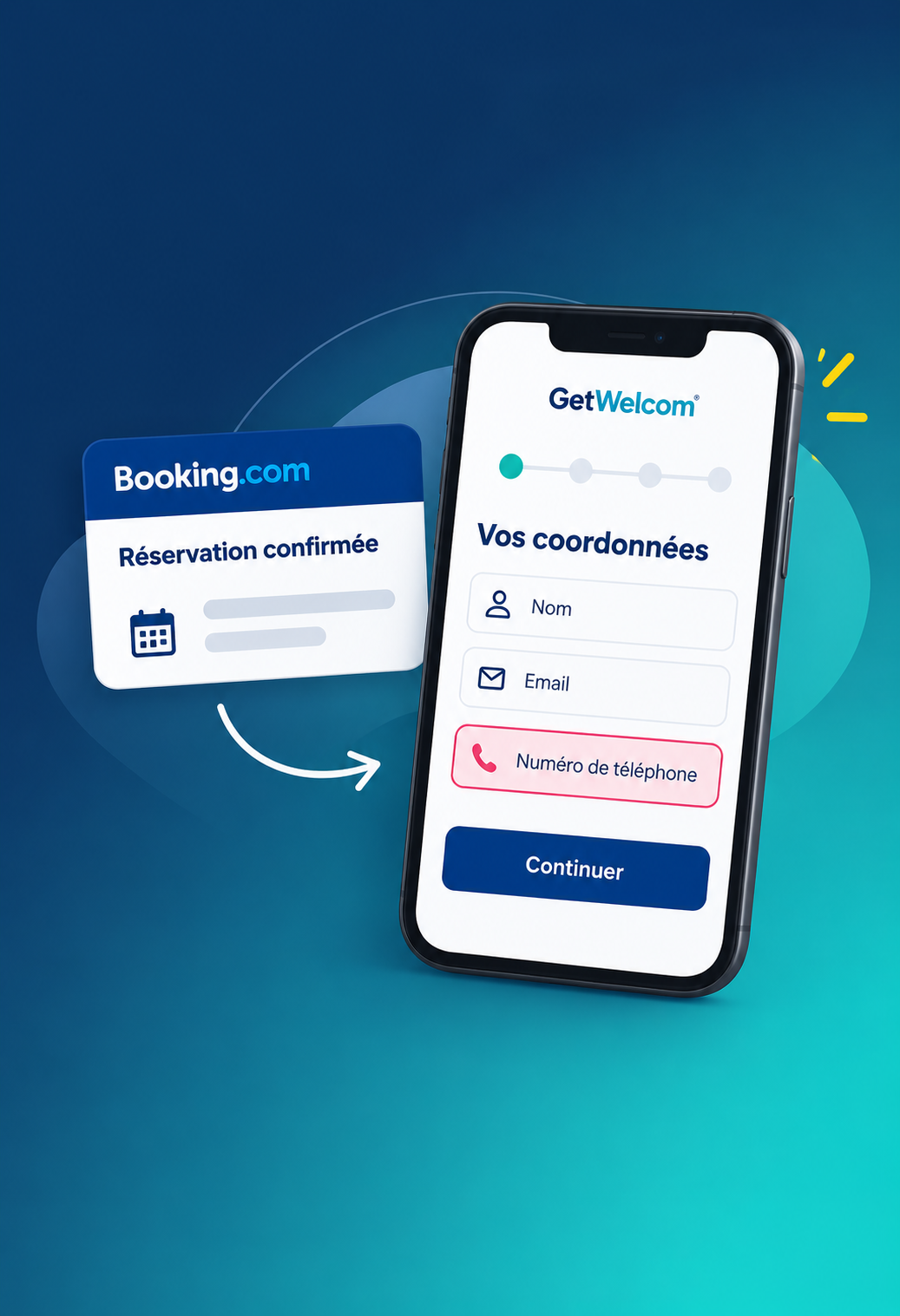
A customer experience solution connected to the PMS automatically retrieves reservation data: guest name, arrival date, room type, language. It uses this information to personalize every communication, from the online check-in form to the in-stay satisfaction survey, without any manual re-entry by staff.
While the PMS manages the guest's administrative file, the customer experience solution manages what the guest actually experiences: before arrival, during their stay, and after departure.
To understand how this connection works in practice: discover the benefits of connecting GetWelcom to your PMS.
The market for hotel PMS systems is dense. Dozens of solutions coexist, with very different positioning depending on the size of the establishment, the type of clientele, and the desired level of integration.
Reservation management, check-in, check-out, billing: these functions are present in all modern PMS systems. They are not enough to differentiate solutions.
This is the most important criterion, and often the least well-evaluated during purchase. A PMS that doesn't easily connect to other hotel tools creates data silos and manual processes that negate much of its value.
Questions to ask before signing: what native integrations are available? Is there an open API? Which customer experience, revenue management, and channel management tools are certified as connected?
A PMS that can only be accessed from a fixed workstation at the front desk is an operational hindrance. Modern cloud solutions allow housekeeping teams to receive room status updates on their phones, managers to view reports from anywhere, and front desk staff to check in guests on the go in the lobby.
A PMS is a critical tool. A breakdown or malfunction on a busy check-in/check-out day can have serious operational consequences. The quality of support, response times, and the availability of a technical team are criteria to evaluate just as much as the features.
The PMS chosen today for a 30-room hotel must be able to support the establishment's growth: opening a second location, adding a restaurant, developing a spa. Verifying the solution's ability to evolve without a complete migration is a long-term investment.
The Hotel PMS is essential. It structures operations, centralizes data, and ensures the administrative reliability of the stay. Without it, everything falls apart.
But it's not enough. It covers what happens within the system, not what the guest experiences. It manages data, not emotions. It tracks operations, not the experience.
That's why the most successful hotels no longer just ask "what's the best PMS?" but "how does my PMS integrate with tools that cover what it doesn't?"
GetWelcom doesn't replace the PMS. It connects to it to handle everything on the guest side: online check-in form automatically sent before arrival, digital room directory accessible from a smartphone, in-stay satisfaction survey, post-stay communication. Data flows between the two systems without re-entry. Teams save time. And the guest enjoys a seamless experience, from booking to departure.
Want to see how GetWelcom connects to your PMS?
Discover GetWelcom integrations and request a demo