E-réputation et communication
Email vs SMS vs WhatsApp: which channel to choose according to the hotel customer journey?
4
min de lecture
-
04 August 2026
When a reservation arrives via an OTA, many hotels have the same reflex: send a standard email, then hope that the customer reads it.
In reality, it's not that easy.
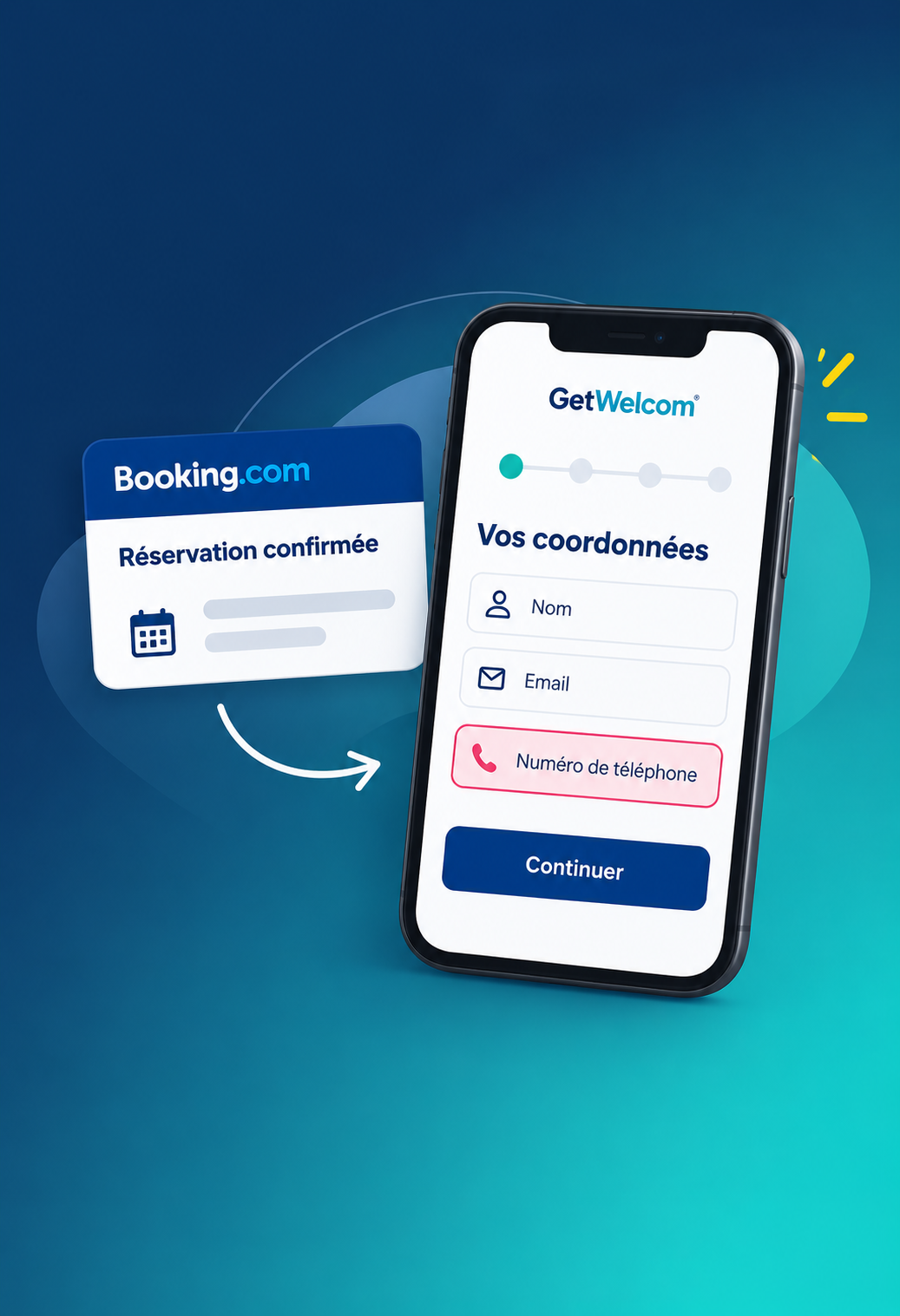
The customer does not always see the email. Sometimes he arrives without having prepared his stay. He does not know the hotel services. And once there, he often continues to go through Booking, Expedia, or another intermediary instead of entering into a direct relationship with the establishment.
So the real subject is not only communication.
The real subject is customer relationship management.
For a 3 or 4 star hotel, or for a hotel group, choosing the right channel at the right time allows you to regain control of the hotel customer journey, to improve the experience and to open up more revenue opportunities.
There is no single channel that is better than the others.
In the hotel industry, the email, the SMS and WhatsApp Business do not have the same role.
So the right choice depends on only one thing: The moment of the customer journey and the type of message to be sent.
In many establishments, customer relationships remain fragmented.
The customer books via an OTA.
He gets an email.
Then nothing, or too late.
Upon arrival, the reception must include all the information.
During the stay, requests are made by telephone, face to face or do not come up at all.
After departure, the hotel tries to get a review or build loyalty, but the link has already fallen.
The hotel doesn't have enough control over the touchpoints.
A good channel is not just a channel that “opens well.”
It is a channel that helps the hotel create a hotel customer relationship more direct, more fluid and more profitable.
Before talking about the customer journey, we need to clarify the role of each channel.
Email remains essential in the hotel industry.
It allows you to send:
Email is useful when the customer needs longer content that they can consult at their leisure.
An email can be ignored, drowned in the inbox, or opened too late.
In a hotel, this poses a concrete problem: if the customer did not see the information before arrival, it is often the reception that compensates.
SMS is a short, direct and very quick channel.
It works great for:
SMS is particularly effective when the message is short, useful and linked to a specific time.
Field example: a few hours before arrival, a message with the address, parking or check-in procedures can avoid a lot of questions.
SMS is more intrusive if you use it too often.
It should not become a duplicate of the email.
WhatsApp has a clear advantage: it is a channel that is already used naturally by customers.
It allows:
WhatsApp is particularly relevant when you want to create exchanges, facilitate customer response and offer a more modern experience.
Field example: a customer who is not going to call the reception to ask for a late check-out or a local council will often respond more readily to a WhatsApp message.
WhatsApp needs to be integrated into a clear journey logic, with the right triggers and the right level of personalization.
Before arrival, the customer seeks above all to reassure himself and to prepare for his arrival.
His questions are often the same:
Reduce friction and start building a direct relationship.
To be used for:
SMS
To be used for:
To be used for:
An OTA client receives a simple automatic email that he does not read. He arrives at the hotel without having filled in his information, without knowing the schedules, without having seen the services available.
Result: the reception manages the delay, the explanations and the missed sale.
During the stay, the subject changes. The customer no longer needs a long summary. He needs answers that are simple, fast, at the right time.
Streamline the experience and generate additional income without burdening teams.
Not suitable for immediate requests.
SMS
Useful for:
The most suitable for:
At 16:00, a customer is in his room. It is often a good time to promote a targeted offer: massage, rooftop, tasting menu, room upgrade, late departure.
An email will often be opened too late.
A text message can work if the message is very short.
WhatsApp is often the best compromise to create a direct interaction and promote conversion.
After departure, many hotels cut off the relationship too quickly.
However, it is a key moment for:
Transforming a completed stay into a lasting relationship.
To be used for:
SMS
To be used for:
To be used for:
The customer had a good stay, but the hotel waited three days before sending a long email of satisfaction.
He is no longer in the moment.
A more direct message, sent at the right time, often has more impact.
The customer does not want to receive the same information three times.
An important message that is read too late becomes useless.
SMS must remain rare, useful and contextualized.
WhatsApp works very well, but only if it is integrated into a real logic of digital customer journey.
The subject is not “email versus SMS versus WhatsApp.”
The subject is: What message, when, on what channel, to build a more direct relationship with the customer.
Hotels that make progress on this point get three very concrete benefits:
And most importantly, they stop leaving the entire customer relationship to OTAs.
To regain control of customer relationships, a hotel must stop thinking as a single channel.
THEemail reassures and details.
The SMS alerts and triggers.
Whatsapp engages and brings people together.
It is the intelligent combination of the three that makes it possible to improve the hotel customer journey, to streamline operations and to create a relationship that the hotel finally controls directly.