Revenus & Getwelcom
When measuring customer experience becomes a direct revenue driver
2
min de lecture
-
09 November 2025

The schedule is full, the occupancy rate is good, and yet the results do not always follow in terms of overall turnover.
In the field, this often results in the same way: few sales at the bar, services that are rarely used, and customers who leave without really engaging with the establishment. The impression of having filled well, without really maximizing the value of each stay.
In this type of situation, Revenue Management has generally done its job. The rooms are sold, the prices optimized. But once the customer is there, something is missing to trigger consumption and create value.
This is where the question of customer experience becomes central.
Measuring the customer experience isn't just about collecting feedback or tracking a satisfaction metric. The real interest lies elsewhere: to understand when the customer is in good conditions to interact, consume or engage more.
A customer who experiences a smooth, frictionless stay is naturally more open to proposals. He is more attentive, more available, and more likely to accept a relevant suggestion, whether it is a service, an activity or an extension of his stay.
The challenge is therefore not only to know if the customer is satisfied, but to know when they are satisfied, and how to take advantage of this moment.
A happy customer doesn't just buy a room. He has a complete experience that influences his buying behavior during and after his stay.
In 2026, the numbers speak for themselves:
Conversely, an unsatisfied customer does not consume, does not return and can discourage dozens of bookings with a single negative review.
Revenue Management remains essential. It allows you to optimize your prices, anticipate demand and maximize revenue per room (RevPAR).
But alone, he quickly reaches his limits. Optimizing your rates is useless if your customers don't spend more on site, don't come back and don't recommend your establishment.
That's why the most successful hotels combine Revenue Management + Customer Experience :
Setting up a Customer Experience strategy does not necessarily require heavy investments.
A few simple and actionable actions already make it possible to generate more income:
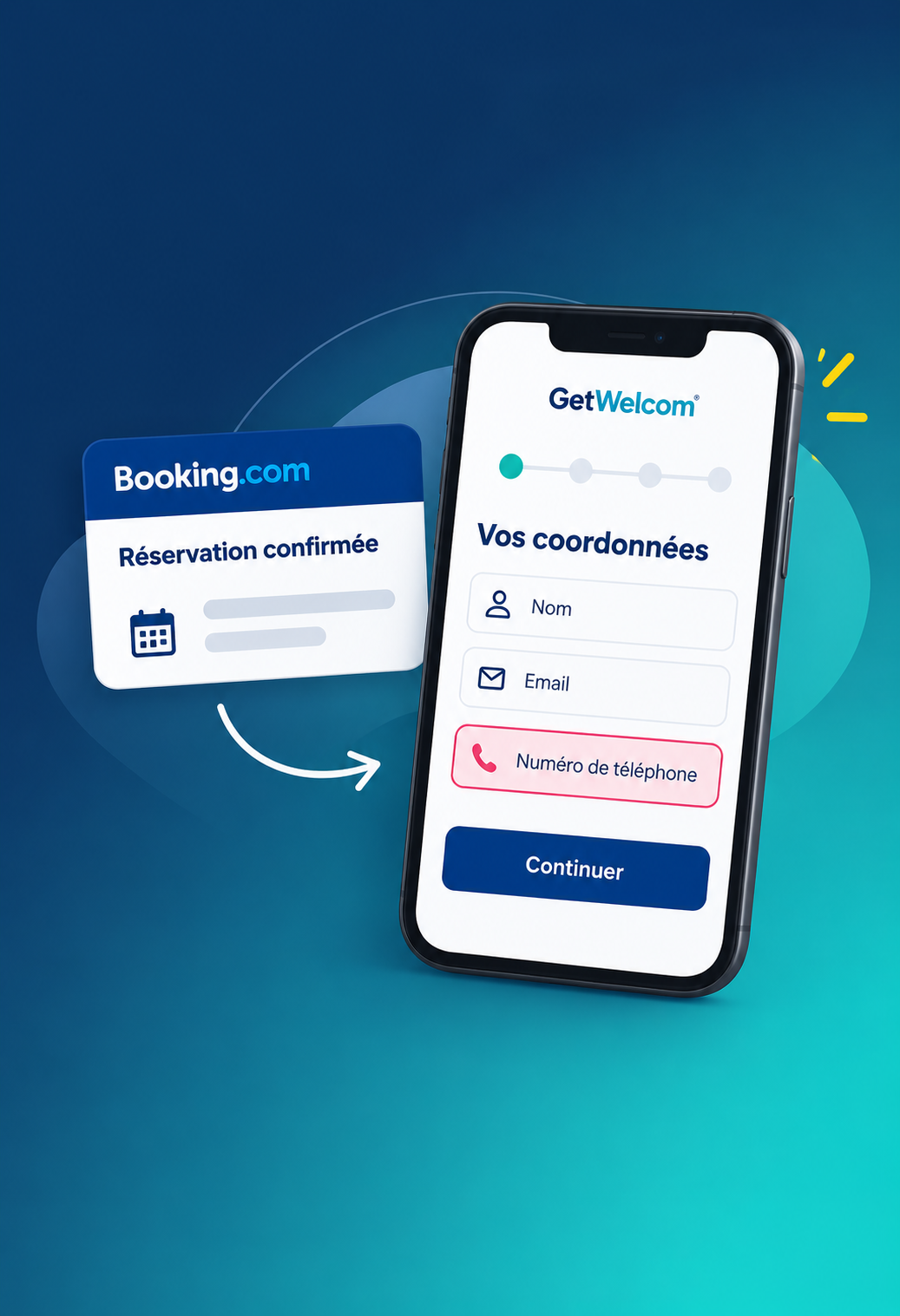
✔️ Digitize the check-in to reduce waiting times and make arrival more fluid.
✔️ Offer personalized extras before and during the stay (late check-out, spa, dinner).
✔️ Collect feedback in real time in order to take action before a problem becomes a negative opinion.
✔️ Solicit satisfied customers to leave an online review and attract new travelers.
✔️ Send targeted communications to build loyalty and encourage them to come back.
Each point of satisfaction is translated into additional revenue and loyalty, therefore in sustainable growth.
In many establishments, the measurement of the customer experience is still based mainly on online reviews or surveys sent after the stay. These tools are useful for having a global vision, but they often arrive too late to have an operational impact.
At this point, the customer has already left. Any problems can no longer be fixed, and the sales opportunities have passed. The information collected is mainly used for analysis, much less for action.
This discrepancy explains why some hotels have a lot of data without this translating into concrete improvements in performance or turnover.
The customer experience is played out in a succession of short moments, often discreet, but decisive.
A customer who has just arrived and who quickly finds his bearings starts his stay in good conditions. A few hours later, although he did not encounter any difficulties, he was in a good mood to discover what the hotel had to offer.
It is precisely at this point that opportunities appear. Offering a dinner, suggesting an activity or offering a complementary service then makes perfect sense. On the other hand, a poorly timed proposal, sent too early or too late, is unlikely to succeed.
Without visibility into the customer's experience at a given moment, these decisions remain approximate. Messages are sent without real certainty about their relevance, which greatly limits their impact.
Revenue Management makes it possible to optimize occupancy and rates. It is an essential lever for managing room income and anticipating demand.
But it usually stops at the time of booking.
The customer experience takes over once the customer is on site. It directly influences everything that happens next: consumption of services, perception of the stay, desire to come back and recommendations.
The most successful institutions do not deal with these two dimensions separately. They articulate them to work on both volume and value. One fills the hotel, the other increases the revenue generated by each guest.
Most hotels already have a complete offer: catering, spa, activities, ancillary services. However, these benefits often fall short of their potential.
This lag is rarely explained by a lack of interest on the part of customers. It is more about how these services are offered.
A customer will not spontaneously look for an offer, especially if they have to make an effort to understand or access it. On the other hand, he is much more receptive when the proposal comes at the right time, in a favorable context, and with a clear message.
Without a good reading of the customer experience in real time, this timing remains difficult to control.
What hotels that generate more revenue actually do
Establishments that score better on additional revenue generally have one thing in common: they use customer experience measurement as a decision-making tool.
They identify moments when the customer is satisfied and available, and adapt their actions accordingly. A positive interaction at the beginning of the stay becomes an opportunity to offer a service. Rapidly detected dissatisfaction is addressed before it degrades the overall experience.
This approach makes it possible to gain in accuracy. Requests are fewer, but better targeted. The customer sees more consistency in the exchanges, which improves both their experience and their level of engagement.
In the field, the most effective actions are not necessarily the most complex.
One smooth check-in makes it possible to immediately set up a good dynamic. The customer arrives in good conditions, without unnecessary waiting, which positively influences the rest of their stay.
Well-positioned communication during the stay makes it possible to promote services without giving the impression of pushing for sales. The customer discovers the possibilities when they can really take advantage of them.
The ability to quickly pick up and treat an irritant also changes the overall perception. A problem that is taken care of quickly often becomes a positive point in the final feeling.
Finally, a customer who is satisfied at the time of departure is naturally more likely to leave a positive review and consider a return.
The difference is not in data collection, but in how it is used.
Measuring the customer experience makes sense when this information is integrated into the journey and used to guide actions in real time. This means connecting contact points, centralizing information, and giving teams a clear picture of the situation.
It is this passage that transforms an indicator into an operational lever.
A good occupancy rate does not guarantee overall performance. The real value of a stay depends on what the customer experiences once there.
By working on the customer experience in a structured way, it becomes possible to increase consumption on site, improve loyalty and strengthen recommendations.
The Revenue Management and the Customer Experience is not opposed. They complement each other to control both filling and value.
Although customer satisfaction is currently measured only after the stay, a significant part of the potential remains untapped.
Structuring the customer journey and integrating the measurement of the experience in real time makes it possible to better manage interactions, optimize key moments and naturally increase the revenue generated by each stay.