Revenus & Getwelcom
Hotel Guest Expectations in 2026: What Travelers Really Want
3
min de lecture
-
21 May 2025

In many hotels, the same situation is repeated every day.
Reception teams answer the same questions, customers are looking for information that has already been sent, and some services remain invisible when they could generate revenue.
This lag does not come from a lack of quality. It comes from a profound change: Customer Expectations Have Evolved Faster Than The Hotel Customer Journey.
Understanding the expectations of hotel customers in 2026 therefore means, above all, understanding what directly impacts your operation: your time, your organization and your income.
For a long time, customer expectations were easy to structure. There were the basics, the complementary services, and the differentiating elements of the experience.
Today, this hierarchy no longer exists.
Fast Wi-Fi, smooth check-in, or quick response are no longer seen as benefits. They are standards. And when they are not there, the impact is immediate on customer satisfaction.
At the same time, hotels need to manage:
As a result, managing customer expectations is becoming an organizational issue, not just a customer experience.
The first expectation of customers in 2026 is simple: Do Not Waste Time.
A customer no longer wants to go through the front desk for every piece of information. He has immediate and autonomous access to what he needs.
When that's not the case, reception becomes a sticking point. Teams have to respond to repetitive requests, which reduces their availability for higher-value interactions.
On the other hand, a hotel that structures its Customer journey Allows interactions to be redistributed naturally.
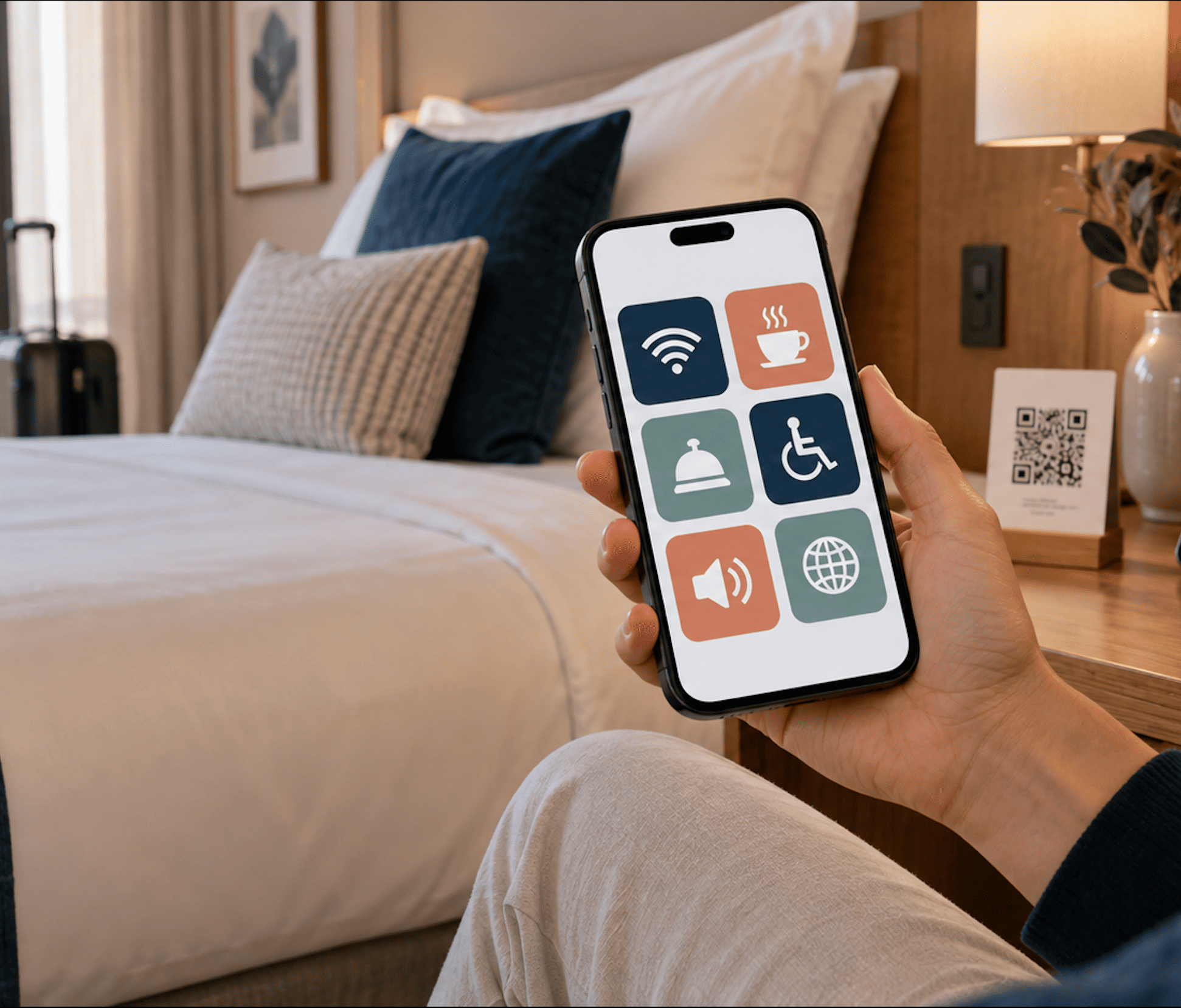
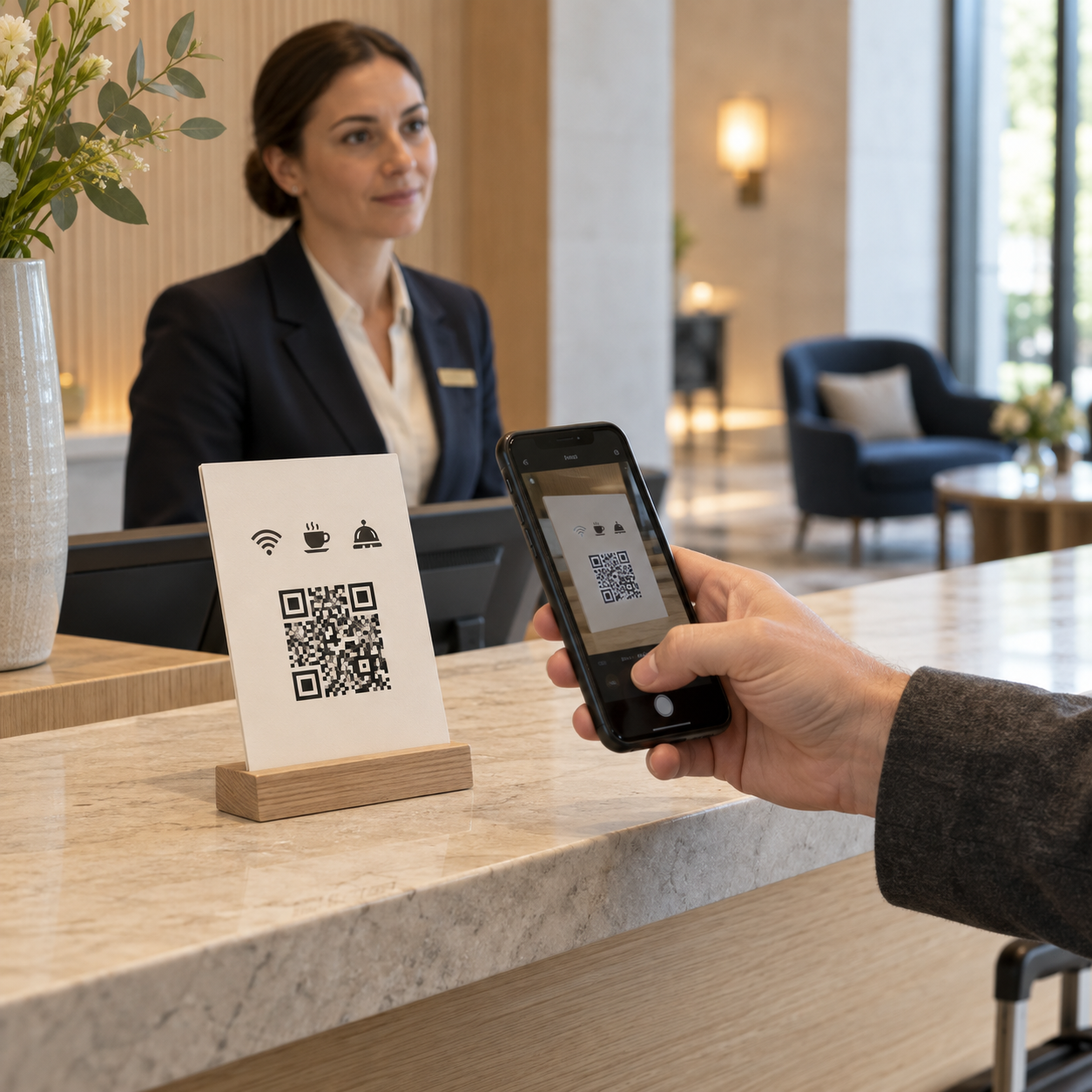
A support like a Digital Welcome Booklet Makes it possible, for example, to centralize essential information and to make it accessible at any time.
In this type of configuration, the effects are visible quickly:
Personalization has become a strong expectation, but it is often misunderstood on the hotel side.
It's not about creating an ultra-complex experience. Above all, the customer achieved consistency. He wants to get the right information at the right time, without having to look for it.
A business customer, a couple on a weekend or a family do not have the same expectations. However, in many establishments, the course remains the same for everyone.
However, the data already exists in the PMS or reservation tools. The problem is not their absence, but rather the lack of exploitation.
Effective personalization is therefore based on simple actions:
This logic is directly integrated into a strategy of Digital Customer Journey, where each contact point is designed to be useful.
A customer no longer only chooses a hotel to sleep in. I choose an experience.
This does not necessarily mean offering more services, but better valuing them. In many establishments, the offer already exists: breakfast, spa, bar, activities, local partnerships.
The problem is often simple: these services are not visible at the right time.
A customer who does not see an offer does not consume it.
On the other hand, a hotel that highlights its services in its Hotel Upsell Strategy Mechanically increases its income.
This emphasis can be structured in a simple way:
The lever is not the offer, but its visibility.
Customer expectations are no longer just about comfort or services. They also affect the overall perception of the establishment.
Travelers want to understand where they are, what they are consuming, and what makes the place unique.
This involves simple elements:
A hotel that works on this aspect naturally reinforces its differentiation, without necessarily investing more.
This logic directly relates to the challenges of hotel customer satisfaction and e-reputation, because an experience that is perceived as authentic generates more positive reviews.
2026 customer expectations have a direct impact on your organization.
They require a shift from an operation centered on reception to an operation centered on the customer journey.
In a classic model:
In a structured model:
The difference is immediately reflected in three points:
It is precisely in this logic that GetWelcom is part of, by making it possible to structure the customer journey, centralize communications and make services accessible at the right time.